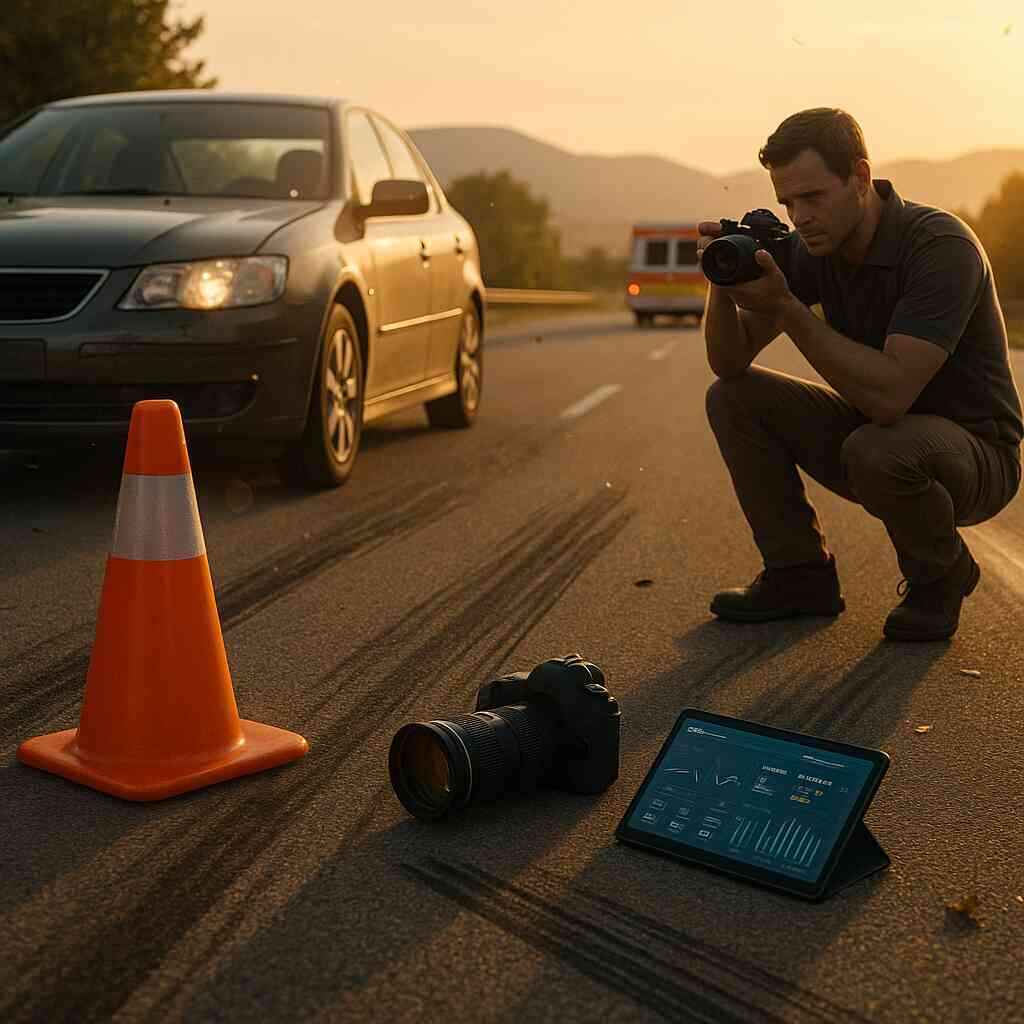
 Posted On: 01/09/2026
First Moments Matter: Building the Foundation of Your Personal Injury Claim
Sudden Impact and the Legal Clock Starts Ticking
A collision explodes into your routine without warning, yet the legal timeline starts instantly. Every second lost can erode critical accident scene evidence that future jurors and adjusters will scrutinize. States impose strict filing deadlines on any personal injury lawsuit, and courts rarely forgive delays. Begin documenting property damage and physical injuries before road crews or rain wash away telltale marks. Our comprehensive accident evidence guide highlights how early proof gathering strengthens negotiation leverage with each insurance company.
The hours after a crash resemble a sand timer, with memories fading as grains slip away. Witness contact information, time stamped injury photos, and vehicle damage assessment must be preserved without gaps. Secure raw files, not just thumbnails, to maintain an unbroken chain of custody personal injury courts demand. If tow trucks haul vehicles before measurements, insist they store them indoors and forbid repairs until inspected. Failing to act may invite spoliation of evidence claims that weaken the injured party’s cause of action instantly.
From Adrenaline to Action: Immediate Steps for an Injured Person
Adrenaline masks pain, yet juries only see documented injuries, not hidden bruises discovered days later. Dial emergency services first, then film the entire scene with smartphone video evidence while remaining safely off-road. Capture dashcam accident footage, roadway debris, license plates, and traffic signals from multiple angles for clarity. Photograph bruises and lacerations again under consistent lighting every few days to track progression. The step-by-step claim process overview explains how each image anchors liability arguments against powerful insurance companies.
After paramedics clear you, request transportation to the nearest hospital even if the discomfort feels minor. Emergency room discharge papers record objective findings that later defeat defense claims of exaggeration. Keep all medical billing records, prescription receipts, and imaging discs because they corroborate monetary damages. Start a pain journal for injuries, noting sleep disruption and work limitations to document emotional distress. Share entries only with your legal team to avoid insurance adjuster misuse.
Leveraging Personal Injury Law Locator for Rapid Legal Representation
Evidence means little without a swift legal strategy driving it toward compensation. Within minutes, Personal Injury Law Locator can locate injury attorneys near me fast, matching your case specifics. Our network spans every state, ensuring familiarity with local filing deadlines and courtroom culture. Early attorney involvement protects your rights during initial insurance adjuster conversations and recorded statements. Seasoned counsel immediately dispatches investigators, accident reconstruction experts, and subpoena teams before evidence disappears.
If you were hurt while passing through the Lone Star State, expert personal injury counsel in Texas stands ready. Likewise, our platform connects tourists or commuters to seasoned accident attorneys in New York within hours. The service is free, and attorney fees only arise after a successful personal injury settlement or verdict. Because we vet every law firm, you gain instant confidence that your physical injuries will receive focused attention. Personal Injury Law Locator resources empower victims to transform meticulous proof into maximum financial recovery.
Capturing Digital Breadcrumbs, Photos, Videos and Black Box Data
Time Stamped Injury Photos and Vehicle Damage Assessment
Every personal injury claim begins with clear, time stamped injury photos that prove a motor vehicle accident actually happened. Shoot wide-angle images first, then tighten each frame to highlight dents, broken glass, and displaced airbags. Preserve the original metadata because insurance companies routinely challenge when and where pictures were taken. Your legal team will later compare paint transfers and crumple zones with repair invoices to quantify property damage. Strong visuals also provide the foundation for the best tactics for insurance negotiations because adjusters respond quickly to undeniable evidence.
Store every photograph in two secure locations to prevent loss and establish an unbroken chain of custody personal injury courts require. Rename files using consistent conventions that include date, location, and vehicle part photographed. Never edit lighting or color because digital alterations invite a spoliation of evidence claim. Instead, keep raw files and supply edited versions only for presentations. Maintaining purity ensures accident scene evidence survives expert cross-examination later.
Smartphone Video Evidence and Dashcam Accident Footage
Video captures motion, sound, and sequence, turning chaotic seconds into a compelling narrative for jurors. Begin recording from a safe distance, slowly walking toward the collision while describing injuries you observe. Include license plates, roadway conditions, and traffic signals to support eyewitness testimony that personal injury lawyers can leverage. If your vehicle carries a dashcam, remove the memory card immediately and duplicate the data on a separate drive. Doing so prevents accidental overwrites that could weaken future claims for medical bills or wrongful death damages.
Modern phones stabilize shaky footage, yet perspective still matters, so film both horizontal and vertical clips for flexibility. If you were traveling through the Sunshine State, auto accident legal help in Florida can subpoena nearby security cameras that might supplement your recording. Be mindful of state wiretap statutes when videos capture voices, and never post raw clips online. Instead, deliver them directly to a personal injury attorney who understands privacy rules and admissibility standards.
Black Box Data Car Crash Retrieval and Secure Chain of Custody
Most late-model cars record acceleration, brake force, and seat-belt status in an onboard event data recorder. Retrieving black box data car crash information quickly helps an accident reconstruction expert recreate events millisecond by millisecond. However, specialized tools are required, and tampering voids critical warranty protections. Therefore, instruct the tow yard to store the vehicle indoors and forbid battery disconnection until technicians arrive. Meticulous handling allows your law firm to match digital readings with skid mark analysis for irrefutable proof.
Commercial rigs hold even richer electronic logs, and a strategic approach to Nevada truck cases can transform that data into multimillion-dollar verdicts. Chain-of-custody documentation must list every individual who accessed the module, preventing defense counsel from alleging manipulation. Lawyers also request driver qualification files and truck accident logbooks to verify hours-of-service violations. By integrating multiple data streams, Personal Injury Law Locator professionals turn complex science into courtroom-ready graphics that resonate with juries.
Social Media Accident Posts Preserving Without Prejudicing Your Case
Social media accident posts may feel cathartic, yet they often sabotage personal injury lawsuits. Defense teams scour public profiles looking for smiling selfies to argue the injured party suffers minimal physical injury or emotional distress. Instead of publishing, capture screenshots of any third-party comments that admit fault or describe hazardous road conditions. Save these images offline, and let your legal representation decide how to reveal them strategically. Silence online strengthens credibility during subsequent insurance adjuster conversations.
Managing your digital footprint also involves documenting pain without broadcasting it to the world. Instead of posting, keep a private diary and consult guidance on recording emotional distress evidence that meets evidentiary standards. Adjust privacy settings so only trusted contacts can view historical content already shared. Avoid deleting old posts because mass removal could appear suspicious and trigger discovery disputes. Thoughtful restraint today preserves maximum claim value tomorrow.
 Witness Statements and Medical Records: The Human and Paper Evidence
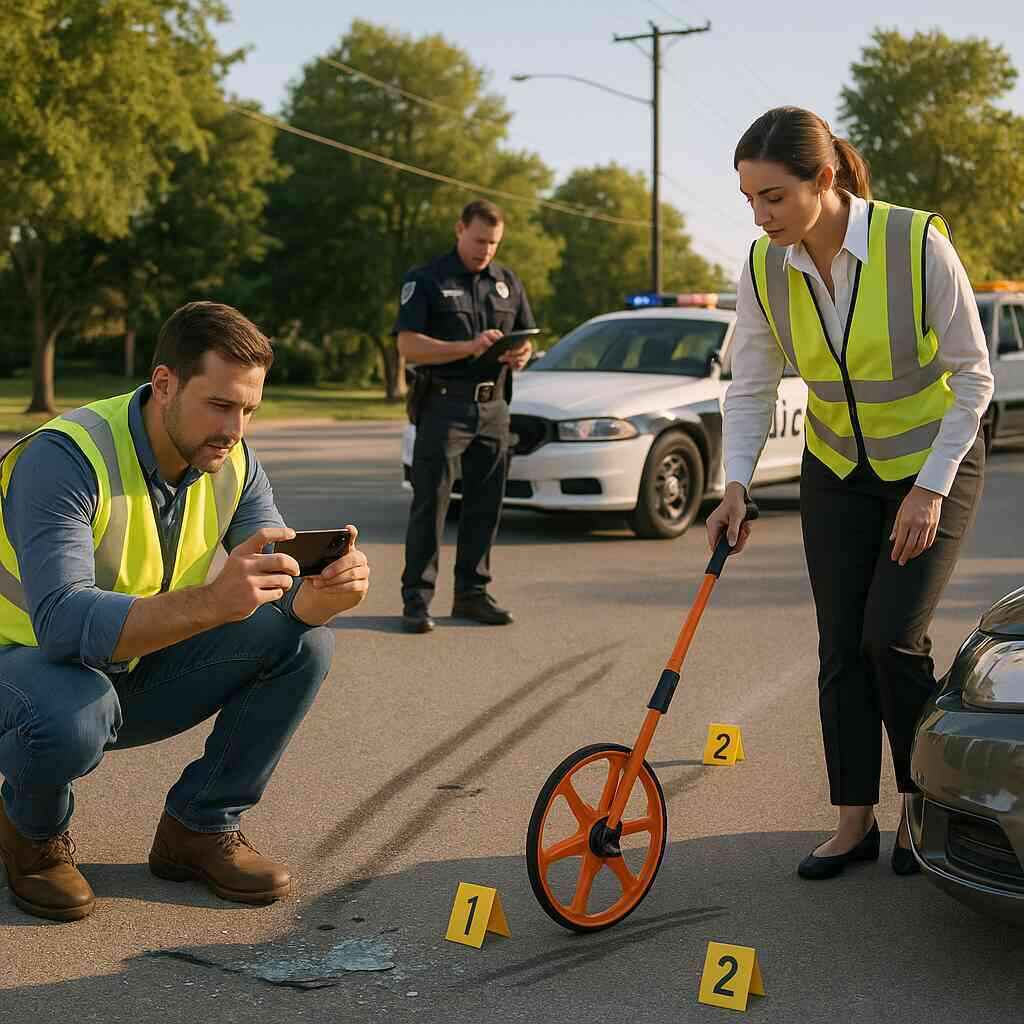 Witness Statements and Medical Records: The Human and Paper Evidence
Eyewitness Testimony Personal Injury Best Practices
Eyewitness accounts can transform a motor vehicle accident narrative from speculation into an undeniable fact. Right after the crash, gather witness contact information, including phone numbers and email addresses, before they disperse or forget details. When possible, ask each person to dictate a brief statement on your phone, capturing voice inflections that written summaries often miss. Remind every witness to mention weather, traffic flow, and any driver admissions, because those contextual notes frequently sway insurance company assessments. Finally, provide your personal injury lawyer with the raw recordings so a certified court reporter can craft formal affidavits without altering tone or meaning.
Accuracy grows when memories are preserved quickly, yet formality matters just as much. Encourage witnesses to date and sign written statements within twenty-four hours, creating a solid chain of custody that personal injury courts respect. Never coach or suggest specific phrases; instead, let witnesses describe sights, sounds, and smells in their own words for authenticity. While you focus on recovery, your legal team will cross-reference each recollection with dashcam accident footage and accident scene measurements to isolate inconsistencies. Clear, consistent testimony reduces an insurance adjuster’s ability to deny liability and accelerates your personal injury claim timeline. By treating every bystander like a potential expert, you elevate the credibility of your entire case.
Police Accident Report Retrieval and Traffic Camera Footage Subpoena
Police crash reports often serve as the backbone of any civil lawsuit because they capture officer observations, preliminary fault determinations, and diagrams of property damage. Request your report as soon as it becomes available, then examine it for transcription errors that could later undermine your personal injury lawsuit. If the investigating agency delays, your attorney can submit a formal Freedom of Information Act request to speed the release. Pair the official narrative with supplemental evidence from nearby traffic cameras, which frequently document impact angles and signal phases. Proactive collection shows insurers you intend to prove negligence elements methodically.
High-definition intersection recordings vanish quickly under routine data-purge policies, so rapid subpoena action is critical. Experienced counsel, like truck collision specialists in Nevada, know which municipal departments store footage and the precise retention periods. They also coordinate sworn affidavits from custodians of records, ensuring admissibility and preventing spoliation of evidence claims. When heavy trucks or multiple vehicles are involved, layered video angles can reveal brake-light timing and lane drift, strengthening your argument against large commercial insurers. Collecting both police documentation and electronic visuals creates a synchronized chronology that jurors instantly grasp.
Emergency Room Discharge Papers and Ongoing Medical Billing Records
Medical records prove that physical injuries stem from the collision rather than preexisting conditions. Always request complete emergency room discharge papers, including diagnostic codes, medication lists, and physician commentary. These documents establish causation and guide follow-up medical treatment, forming the foundation for accurate damage calculations. Save every imaging disc and laboratory result, because defense experts often scrutinize raw data looking for alternative explanations. When your personal injury attorney compiles the file, a clear chronological order helps demonstrate continuous care, limiting an insurance company’s argument that gaps in treatment reduced symptom severity.
Equally important, collect every medical billing record, from ambulance invoices to physical therapy receipts. Organize them by provider and date, then cross-check against your health-insurance explanations of benefits for completeness. A well-documented cost trail allows your legal team to demand reimbursement for both economic damages and projected future expenses like prosthetics or revision surgeries. If wage loss accompanies recovery, attach employer statements verifying missed shifts and salary deductions. Comprehensive paperwork not only supports settlement negotiations but also meets strict evidentiary standards should your personal injury claim proceed to trial.
Pain Journal for Injuries Documenting Emotional Distress
Invisible injuries, such as chronic pain or anxiety, can be difficult to quantify without diligent daily records. Begin a pain journal for injuries immediately, noting time of day, activity level, and exact discomfort intensity using a consistent scale. Include descriptions of emotional distress, like sleepless nights or fear of driving, because courts increasingly recognize psychological harm. Share updates only with your legal team and treating medical professionals to preserve confidentiality and avoid misinterpretation by opposing counsel. This written narrative humanizes medical charts, helping jurors relate to the lived experience behind diagnostic codes.
Consistency turns subjective feelings into persuasive evidence. Pair journal entries with appointment summaries from therapists or pain specialists to demonstrate that emotional and physical injuries evolve together. If uncertainties arise about what to record or how disclosures may impact privacy, reach out through direct contact for legal questions and obtain tailored guidance. Over time, the journal becomes a timeline that correlates mood fluctuations with imaging results, medication adjustments, and work absences. When settlement talks begin, your attorney can translate these qualitative details into monetary figures that accurately reflect ongoing suffering. In court, a credible diary often tips the scale by showing jurors the day-to-day reality an injured person endures.
Physical Proof in Motion: Skid Marks, Gear and Reconstruction Science
Accident Scene Measurements and Skid Mark Analysis
Precise accident scene measurements anchor every motor vehicle accident claim. Investigators map gouges, debris fields, and yaw marks before traffic resumes. Using laser scanners, they capture millimeter-level data that later feeds computerized skid mark analysis models. Those calculations reveal impact speed, braking force, and evasive maneuvers that a negligent driver may deny. Insurance companies respect mathematics; numbers dissolve conjecture and bolster settlement leverage.
Always document reference points, such as utility poles or lane dividers, to validate scale and orientation. When possible, gather measurements while road surfaces remain undisturbed by weather or congestion. Photograph each tape position from multiple angles to preserve context for courtroom displays. Maintain a strict chain of custody personal injury courts demand by logging every person who handles measurement devices. That diligence prevents opposing counsel from challenging authenticity or accusing your team of data manipulation.
Preserving Motorcycle Gear Evidence and Truck Accident Logbooks
Motorcycle crashes leave unique physical clues. Helmets, jackets, and gloves exhibit scuffs, tears, or embedded debris that reveal impact direction. Store each item in separate, breathable containers so moisture does not alter residue patterns. Avoid cleaning gear; even a single wipe can erase paint transfers linking a reckless driver to the scene. Catalog every piece with date, location, and custodian details to guard against later tampering claims.
Commercial transport collisions introduce another critical artifact: the driver’s hours-of-service logbook. Federal regulations mandate accurate entries, yet falsifications are common when delivery deadlines loom. Preserve both paper and electronic logs immediately, then cross-reference entries against toll receipts and GPS pings. Doing so strengthens arguments built on advanced truck settlement strategies that Personal Injury Law Locator attorneys employ nationwide. Thorough documentation can uncover fatigue, improper maintenance, or systemic safety violations that multiply potential damages.
Surveillance Footage Request and Spoliation of Evidence Claim
Modern streets bristle with cameras perched on storefronts, buses, and smart traffic lights. Promptly request footage before automatic overwrite cycles erase vital seconds. Your personal injury lawyer will issue preservation letters to property owners, creating a legal duty to safeguard files. Failure to comply may trigger a spoliation of evidence claim that shifts courtroom presumptions against the offending party. Speed, therefore, converts blurry rumors into crystal-clear proof.
When requesting video, specify time span, camera angle, and storage format to streamline retrieval. Maintain duplicate copies on encrypted drives, documenting hash values that verify integrity. Share working files with accident reconstruction experts while sealing masters in evidence lockers. Such methodical handling underscores professionalism and deters challenges about editing or context. Ultimately, well-preserved footage can synchronize with skid mark trajectories, weaving a persuasive narrative for jurors.
Accident Reconstruction Expert Collaboration with Your Legal Team
Accident reconstruction experts translate scattered fragments into coherent timelines that ordinary jurors understand. They merge black box downloads, scene measurements, and biomechanical data into 3D animations that replay events second by second. By illustrating force vectors and occupant kinematics, experts bridge technical gaps that insurance adjusters exploit. Credible visuals often persuade carriers to settle rather than risk trial exposure.
Personal Injury Law Locator connects injured parties with specialists who hold engineering and forensic credentials. Your legal team coordinates site visits, supplies preserved motorcycle gear, and provides truck accident logbooks for comprehensive analysis. Continuous collaboration ensures every hypothesis aligns with physical evidence, eliminating surprises during deposition. As experts finalize reports, attorneys translate findings into concise legal arguments that meet evidentiary rules. Together, science and strategy transform raw proof into financial recovery without unnecessary delay.
From Archive to Courtroom: Converting Evidence into Compensation
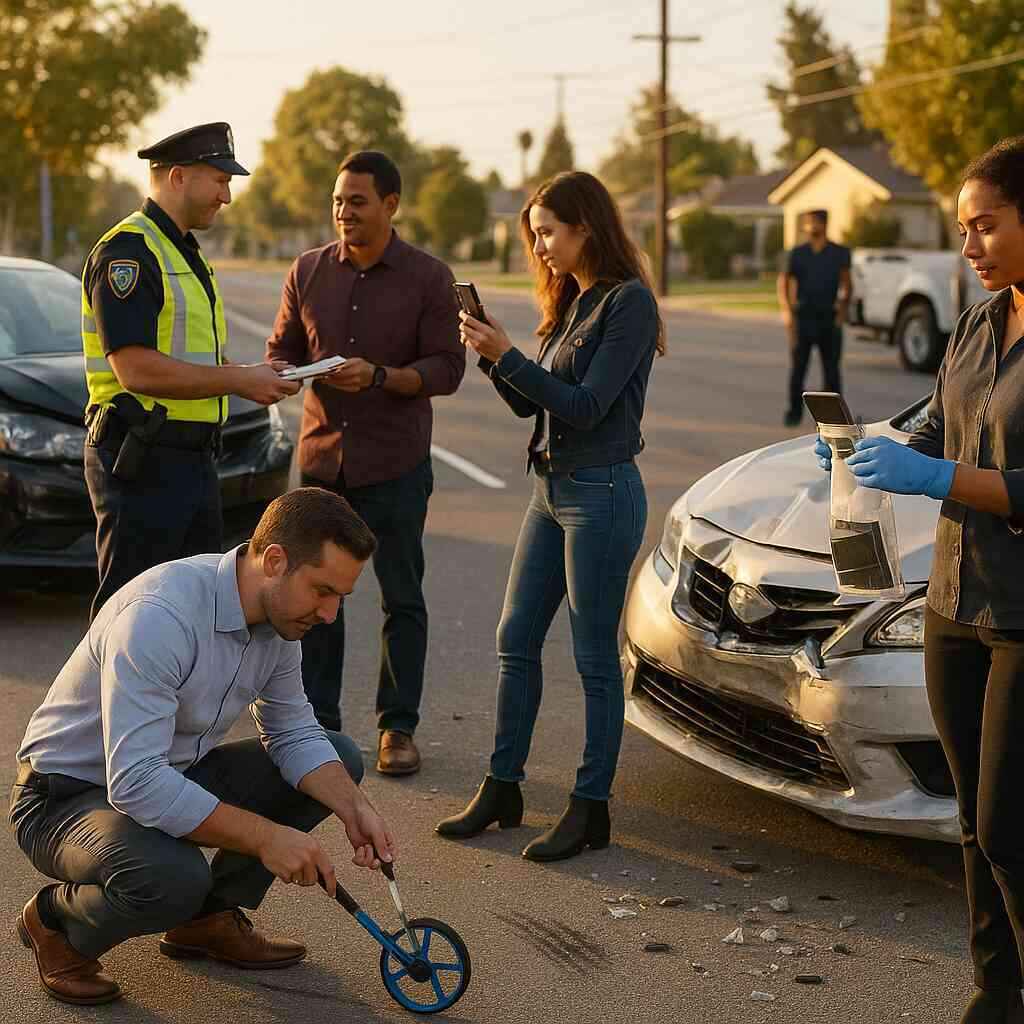 From Archive to Courtroom: Converting Evidence into Compensation
Organizing Lost Wages Proof and Property Damage Repair Estimates
Meticulous paperwork turns accident scene evidence into clear financial figures that persuade even skeptical juries. Begin by collecting pay stubs, direct-deposit statements, and employer letters that specify missed hours, overtime losses, and diminished bonus eligibility. Pair those documents with physician restrictions to connect each lost paycheck to your physical injury rather than personal choice. Next, secure multiple property damage repair estimates that itemize parts, labor, and completion timelines; this prevents the insurance company from claiming inflated numbers. Finally, store every spreadsheet in chronological order, backed up twice, so the opposing law firm cannot challenge authenticity.
Consistency across records amplifies credibility. For example, list every work absence in the same format you record a pain journal for injury entries, creating a unified timeline that links emotional distress to economic harm. Attach dated photographs of vehicle damage progression to each repair invoice, proving no new dents arose after the collision. When numbers, images, and medical records documentation align, adjusters recognize that your personal injury claim withstands courtroom scrutiny. That realization often accelerates negotiations toward full reimbursement, including future wage-loss projections calculated by vocational economists.
Insurance Adjuster Conversations: Protecting Your Claim Value
Insurance adjusters seem friendly, yet their mission is to trim payouts, not support the injured party. Therefore, never discuss calculated totals without your legal team present, and never provide raw photos or social media accident posts prematurely. Instead, reference summarized figures only, reserving detailed spreadsheets until settlement talks become serious. This strategic silence prevents cherry-picking data or twisting casual comments into admissions that reduce claim value. Moreover, always follow discussions with written confirmations that list agreed points and outstanding disputes.
Preparation is power during these calls. Study policy limits, review medical billing records, and anticipate challenges about causation before answering the phone. Bring comparative quotes showing why reputable shops estimate higher repair costs, undercutting lowball offers. If negotiations stall, consider escalating the file to the carrier’s supervisor while reminding them that juries routinely award greater sums once top car crash lawyers in California expose unreasonable delays. Such measured pressure signals readiness for a civil lawsuit, often unlocking reserves that the adjuster withheld.
Deploying Personal Injury Law Locator Resources for Strategic Advantage
Raw information matters, yet expert deployment wins civil cases. Personal Injury Law Locator instantly connects victims to specialized counsel who know local judges, juries, and procedural quirks. Within hours, your chosen personal injury attorney can hire an accident reconstruction expert, translate skid mark analysis into 3D visuals, and draft preservation letters that halt spoliation of evidence claims. That rapid action maintains a pristine chain of custody that personal injury courts demand.
Our nationwide network also taps industry-leading economists, biomechanical engineers, and medical professionals who quantify long-term care costs with precision. Because each firm is pre-vetted, you spend zero time sifting through marketing hype and more time focusing on recovery. Even better, contingency-based representation eliminates upfront attorney fees, aligning lawyer incentives with your best outcome. Should you practice law and wish to broaden your reach, you can even add your law firm listing today and join a system built on transparency and proven results.
Turning Proof into Payment: Achieving Optimal Settlements or Verdicts
When negotiations close, your legal team packages every piece of preserved accident scene evidence into a compelling settlement demand. They weave smartphone video evidence, eyewitness testimony personal injury affidavits, and black box data car crash metrics into a story that resonates emotionally and logically. Then they present clear tables showing medical treatment costs, lost wages proof, and projected rehabilitation expenses. By answering each element of negligence and quantifying damages, the demand forces insurers to weigh predictable trial exposure against swift resolution.
If carriers still refuse fair compensation, your attorneys will file a personal injury lawsuit and prepare courtroom exhibits well ahead of discovery deadlines. Animated reconstructions, pain journal excerpts, and certified medical records documentation frame a vivid narrative for jurors. Because every document follows strict evidentiary standards, defense counsel struggles to discredit them. Consequently, many civil cases settle on the courthouse steps, while those that proceed often conclude with verdicts that surpass initial offers. Ultimately, disciplined evidence management transforms uncertainty into financial security for the injured person.
Frequently Asked Questions
Question: How quickly should I start preserving accident scene evidence after a car accident, and can the Personal Injury Law Locator connect me with an attorney immediately?
Answer: The legal clock starts the instant a collision occurs, so every minute counts. You should begin preserving accident photos, gathering witness contact information, and securing smartphone video evidence before tow trucks arrive or weather destroys skid mark analysis data. Personal Injury Law Locator can match you with a vetted personal injury lawyer near you in seconds, ensuring a rapid response team documents vehicle damage assessment, black box data car crash readings, and emergency room discharge papers while they are still fresh. Early attorney involvement prevents spoliation of evidence claims and lays the groundwork for a strong personal injury lawsuit.
Question: What kinds of digital proof-like time stamped injury photos or dashcam accident footage-will a Personal Injury Law Locator attorney actually use to strengthen my case?
Answer: Experienced counsel leverage a full spectrum of digital breadcrumbs. Time stamped injury photos establish when and where bruises, lacerations, and property damage occurred. Dashcam accident footage and smartphone video evidence recreate the sequence of events for insurers and jurors. Attorneys also retrieve black box data car crash metrics, traffic camera footage subpoena records, and surveillance footage requests from nearby businesses. By merging these files with medical records documentation and police accident report retrieval, your legal team crafts a cohesive narrative that maximizes settlement value.
Question: In the Accident Evidence Guide From Personal Injury Law Locator, you recommend keeping a pain journal for injuries; how does that help my personal injury claim?
Answer: A pain journal provides day-to-day context that diagnostic imaging alone cannot capture. Detailing emotional distress, sleep disruption, and physical limitations converts subjective suffering into objective evidence. When paired with medical billing records, lost wages proof, and ongoing treatment notes, your diary demonstrates the collision’s long-term impact on quality of life. Personal Injury Law Locator attorneys present these entries during insurance adjuster conversations or trials to justify compensation for both economic and non-economic damages.
Question: How does Personal Injury Law Locator ensure the chain of custody that personal injury courts demand when collecting police reports, dashcam files, and other critical documents?
Answer: Our affiliated law firms follow strict forensic protocols. They log every handoff of evidence-whether it’s police accident report retrieval, raw dashcam accident footage, or skid mark analysis measurements-creating an unbroken audit trail. Digital files are stored with hash values to verify authenticity, and physical items such as motorcycle gear evidence or truck accident logbooks are tagged, sealed, and stored in secure facilities. This meticulous process shields your case from credibility attacks and keeps evidence admissible.
Question: I’m worried about talking to insurance companies after the crash. Will your attorneys handle insurance adjuster conversations and fight any spoliation of evidence claim?
Answer: Absolutely. Personal Injury Law Locator connects you with lawyers who take over all insurance adjuster conversations, preventing inadvertent statements that could devalue your personal injury claim. They issue preservation letters to adverse parties, obtain surveillance footage requests, and act quickly if a carrier mishandles or destroys evidence-triggering sanctions for spoliation of evidence. While you focus on recovery, your legal team protects property damage repair estimates, organizes workplace accident incident report data, and pursues full compensation for medical bills, lost income, and future care needs.