 Posted On: 10/23/2026
Medical bills after a workplace injury claim often arrive before workers’ compensation or any third-party case is resolved, and that does not always mean you are personally stuck with them. The key is to identify who should pay, preserve every bill, and challenge errors quickly so a small balance does not grow into a bigger problem.
If you are reading this because a stack of bills just landed in your lap, take a breath. This part is genuinely confusing for most people, and we hear that almost every week from injured workers who are trying to heal, keep working, and keep the lights on.
Key Takeaways
- Medical bills after a workplace injury may be routed to workers’ compensation, a health plan, or a third-party claim, depending on who caused the injury and whether treatment was authorized.
- Not every bill you receive is a bill you owe. Sometimes the provider billed the wrong insurer, used the wrong coding, or sent the charge before the claim was processed.
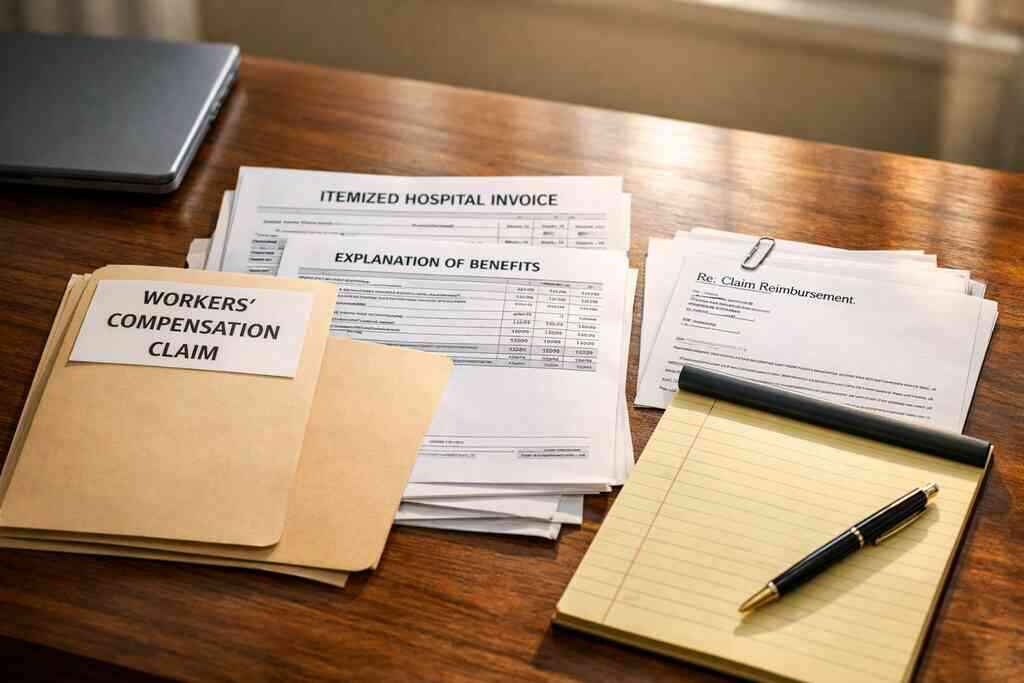
- The paper trail matters. Report the injury, keep treatment records, and save explanation-of-benefits statements, lien notices, and reimbursement letters.
- Authorized care rules can decide payment. If you see an unauthorized provider, a bill may be denied even when the injury is real.
- A workers compensation attorney or personal injury lawyer near me can help sooner than you think, especially if the claim is denied, the bills keep growing, or another party may be liable.
Why the bill shows up before the claim is settled and what that really means
Medical bills show up early because doctors, hospitals, and imaging centers bill on their own schedules, not on the claim timeline. That does not automatically mean you owe the full amount. It usually means the claim is still being sorted out, the right payer has not been confirmed, or a billing issue needs to be fixed.
Which medical bills usually land on your desk first after a workplace injury
The first bills are often from the ER, urgent care, ambulance service, radiology, orthopedic follow-ups, and physical therapy. You may also receive separate bills from the hospital, the physician group, and the lab. That split billing can feel like chaos, but it is common after a workplace injury claim.
Here is the part most people miss: a provider may send the bill to you even when workers’ compensation is supposed to be primary. That can happen because the provider lacks the claim number, the employer has not reported the injury correctly, or the visit was not coded as work-related. If you were hurt on a construction site, in a warehouse, or during a delivery route, this kind of billing mix-up is especially common.
A quick example: one worker we hear about often had an ER visit after a fall from a loading dock. The hospital bill showed up first, then a separate radiology charge, then a therapy invoice. None of it meant the claim was denied. It meant the paperwork trail had not caught up yet.
How workers compensation medical bills can get split between your employer carrier and your own health plan
Workers’ compensation usually pays for reasonable and necessary treatment for a covered work injury, but the claim may be disputed, delayed, or only partially accepted. In some cases, your own health insurance pays first and later seeks reimbursement through subrogation in injury claims. In other cases, the provider bills the wrong plan and the account gets bounced between payers.
Payer pathWhat it usually meansWhat you should watch forWorkers’ compensation carrierThe injury is accepted as work-relatedMake sure the claim number is on fileHealth insuranceThe comp claim is delayed, denied, or incompleteSave every explanation of benefitsOut-of-pocket billingThe provider has no confirmed payer yetCheck for billing errors before payingThe U.S. Department of Labor explains that workers’ compensation systems vary by state, which is why payment rules, authorized provider requirements, and dispute steps can differ so much from one claim to another. If you are trying to coordinate health insurance and workers comp, that state variation matters a lot.
When an out-of-pocket charge is really a billing error and when it may be your responsibility
An out-of-pocket charge is often a billing error when the provider billed the wrong insurer, failed to attach the claim number, used the wrong diagnosis code, or ignored a workers’ compensation authorization. It may be your responsibility when the treatment was unrelated to the workplace injury, happened outside the approved network, or was obtained without proper referral rules. A practical checklist helps here: 1. Compare the bill to your visit summary and discharge paperwork.
- Ask whether the provider billed workers’ compensation, health insurance, or both.
- Request an itemized bill and confirm the codes.
- Save any denial letters or explanation-of-benefits statements.
- Do not pay disputed charges before you understand why they were denied.


If the amount looks wrong, ask for a written review. Hospital billing offices can correct mistakes, and some will place the account on hold while they reprocess the claim. For general background on claim handling, you can also review How to File an Injury Claim, which explains the early paperwork that often prevents billing problems later.
The paper trail that keeps medical bills from turning into a second injury
A clean paper trail protects you from duplicate bills, delayed reimbursement, and avoidable denials. Report the injury promptly, keep copies of every medical record and bill, and make sure every provider knows the injury was work-related. If another person or company caused the injury, document that too, because a third-party claim can change who ultimately pays.
How to file an injury claim and report treatment so the record matches the accident
Start with your employer’s injury reporting process, then keep your own file. The record should match the facts of the accident, the date symptoms started, and each provider you saw. If you wait too long to report treatment, the insurer may argue the injury came from something else.
Use this simple structure:
- Report the injury in writing as soon as possible.
- Ask for the claim number and the insurer’s contact information.
- Tell every provider that the injury happened at work.
- Keep copies of referrals, work restrictions, and work excuse notes.
- Save all medical bills after an accident in one folder, paper or digital.
If your injury happened at a job site, a store, or a rental property, the same recordkeeping helps preserve a possible premises liability attorney claim too. For broader context on claim steps, What Is the Personal Injury Claim Process for Medical Bills is a useful companion guide.
One client with a back injury after a warehouse lift had bills spread across three providers and two insurers. Once the claim file matched the actual treatment dates, the denials became easier to challenge. The issue was not the injury itself. It was the missing paper trail.
Why authorized medical provider rules matter and how to avoid treatment that is later denied
Authorized provider rules matter because workers’ compensation often pays only for treatment that was approved, referred, or taken within the proper network. If you choose the wrong clinic, skip the referral step, or see a specialist outside the rules, the carrier may deny the bill even if the care was medically reasonable. That is why a workers compensation attorney can be useful before the balance grows.
Here is what to check before your next appointment:
- Is the provider authorized for workers’ compensation cases?
- Did your adjuster approve the referral in writing?
- Is the provider in the correct network for your state?
- Did you receive an itemized invoice, not just a balance notice?
- Did the office bill the claim number, not your personal account?
A disputed bill is not always a dead end, but it can become one if you ignore it. Keep every denial letter, because it may support a reimbursement request, a billing appeal, or a subrogation review later. If your injury involved a car crash on the way to work, a delivery collision, or a truck impact in a parking lot, a separate third-party claim may also be available, which can affect how medical bills are paid and repaid.
If you need a broader consumer-facing overview, the Personal Injury Law Locator on Medical Bills After an Accident resource explains how medical billing problems often intersect with settlement negotiations, liens, and reimbursement requests. For readers who want state-by-state help, a find a personal injury attorney search can point you toward a licensed attorney who understands local rules.
When the bills, denials, and employer paperwork start to overlap, a free injury consultation can save time. A licensed lawyer can review medical bills after an accident, check for a personal injury lien, and compare a workers’ compensation route with a separate third-party liability workplace injury claim. Laws vary significantly by state, and the personal injury statute of limitations can affect how long you have to act.
If you want help sorting that out, Personal Injury Law Locator can connect you with verified attorneys across all 50 states. A personal injury lawyer near me search through a directory is often the quickest way to compare injury lawyer reviews, find injury attorney by zip code, and speak with a contingency fee lawyer who offers a no win no fee lawyer arrangement where allowed. Start with one call, and ask for a free injury consultation at 1 (844) 471 1072.
Frequently Asked Questions
Question: What should I do first when medical bills after accident arrive during a workplace injury claim?
Answer: Start by preserving every bill, explanation of benefits, denial letter, and visit summary, then report the injury through your employer’s injury reporting process if you have not already done so. In many cases, workers compensation medical bills are supposed to be routed to the employer’s carrier, but paperwork errors, missing claim numbers, or billing mistakes can cause the bill to land with you first. A personal injury lawyer near me search through Personal Injury Law Locator can help you find a workers compensation attorney or other licensed lawyer in your state who can review whether the charge belongs to workers’ compensation, your health plan, or a third-party liability workplace injury claim. Because laws vary significantly by state, it is smart to get a free injury consultation before paying a bill that may not actually be yours.
Question: How does the blog post How to Handle Medical Bills After a Workplace Injury Claim explain who should pay for treatment?
Answer: The article explains that medical bills after a workplace injury claim may be paid by workers’ compensation, your own health insurance, or a third party depending on how the injury happened, whether treatment was authorized, and whether the claim is accepted or disputed. It also notes that out-of-pocket medical expenses after a workplace injury are often caused by billing errors, not necessarily by a valid responsibility to pay. Personal Injury Law Locator can connect you with an attorney who understands the personal injury claim process, including coordinating health insurance and workers comp, reviewing a personal injury lien, and evaluating whether subrogation in injury claims may apply. If you are unsure whether you need a premises liability attorney, car accident lawyer, truck accident attorney, or another type of lawyer after a work-related incident, a licensed attorney in your state can explain the best path forward.
Question: Can Personal Injury Law Locator help if my workers compensation claim was denied because I saw an unauthorized provider?
Answer: Yes. If a claim is denied because you used an unauthorized medical provider for workers comp, missed a referral step, or went outside the approved network, a workers compensation attorney may be able to help you challenge the denial or correct the record. Personal Injury Law Locator is a nationwide directory that helps injured people find injury attorney by zip code or injury attorney by state, including attorneys who handle denied workers compensation claim issues and medical bill dispute after injury cases. A board certified injury lawyer or top rated personal injury attorneys listing may be especially helpful when the provider, insurer, and employer all disagree about who should pay. Since state rules differ, the best next step is a free injury consultation with a licensed lawyer who can review the exact billing and authorization documents.
Question: When should I contact a personal injury lawyer near me instead of trying to handle hospital bill negotiation on my own?
Answer: It is a good idea to contact a personal injury lawyer near me when the bills keep growing, the carrier is denying treatment, you are receiving collection notices, or another party may also be responsible for the injury. Personal Injury Law Locator can help you compare injury lawyer reviews, find a personal injury attorney, and speak with a contingency fee lawyer or no win no fee lawyer where those arrangements are allowed. That can be especially useful if your situation may involve a personal injury settlement, lost wages claim, pain and suffering damages, or a separate third-party injury claim in addition to workers’ compensation. The earlier you ask for help, the easier it may be to identify billing errors, protect reimbursement rights, and understand the personal injury statute of limitations that may apply in your state.
Question: What kinds of lawyers can Personal Injury Law Locator help me find if my workplace injury involved a car crash, construction accident, or premises liability issue?
Answer: Personal Injury Law Locator connects users with licensed attorneys across all 50 states, including a car accident lawyer, motorcycle accident lawyer, truck accident attorney, bicycle accident lawyer, pedestrian accident attorney, construction accident attorney, slip and fall attorney, premises liability attorney, product liability lawyer, and dog bite injury lawyer, depending on the facts of the case. If your workplace injury also involved severe harm such as a brain injury, spinal cord injury, burn injury, or traumatic brain injury claim, the directory can help you start with an attorney who handles those matters as well. For readers comparing personal injury trial vs. settlement or mediation injury claims, the right lawyer can explain the process and whether a third-party liability workplace injury case may affect medical bills after an accident. Because this is educational information only and not legal advice, Personal Injury Law Locator always recommends speaking with a licensed attorney in your state for guidance tailored to your facts.