 Posted On: 12/09/2025
Lone Star Launchpad Introduction
Why Personal Injury Law Locator is your first call after a Texas crash
Car accidents on I-35 or rural farm roads create different investigative challenges, yet both demand immediate legal triage. By routing your claim through Personal Injury Law Locator, you gain real-time access to top accident lawyers in Texas who understand local crash-scene protocol. These attorneys dispatch investigators, pull black-box data, and photograph skid marks before time erases proof. Rapid evidence capture strengthens your personal injury lawsuit and positions you for higher settlement negotiations during litigation. Speed matters because Texas statutes allow defendants to shift fault percentages unless your team counters with airtight facts.
Few injured parties realize how quickly insurance companies begin constructing defenses. Adjusters may sound accommodating while gathering statements designed to reduce liability. Personal Injury Law Locator neutralizes that strategy by assigning counsel who speaks the insurer’s language and spots bad faith red flags. Your attorney shields you from recorded statement traps, tracks every medical treatment cost, and leverages contingency fee pressure that discourages delay tactics. By converting raw crash data into persuasive exhibits, the legal team keeps the narrative centered on your physical injuries and ongoing economic loss.
Rural collisions often involve limited cell coverage, distant medical facilities, and law enforcement stretched thin. Locator-vetted lawyers know which county clerk processes filings fastest and which mediators resolve disputes efficiently. They coordinate rental cars, bilingual investigators, and specialist doctors who document both visible and latent personal injuries. This coordinated approach preserves physical evidence, strengthens your emotional distress claim, and helps overcome venue biases that sometimes undervalue damages. Partnering early with the platform lets you focus on recovery while your legal representation manages every procedural deadline.
Fast-track Texas personal injury law tips for the newly injured
The hours after any motor vehicle accident set the trajectory for your entire personal injury claim. Photograph every vehicle angle, roadway debris, and weather condition before tow trucks arrive. Preserve digital dash-cam footage and request a copy of the crash report to secure timelines. When you upload these materials through Locator’s portal, attorneys trained in decoding auto accident claims with a locator transform raw files into compelling liability narratives. Timely evidence capture also short-circuits comparative negligence defenses, which can reduce your award if the insurer shifts even minimal blame onto you.
Medical treatment should begin immediately, even if symptoms seem minor. Soft-tissue injuries and mild traumatic brain injuries often surface days after a crash, so early diagnostics are crucial. Keep every prescription receipt and mileage log for doctor visits to anchor your demand letter in verifiable costs. Share those documents through Locator’s secure dashboard; the system links them to statutes governing economic damages and lost wages. Reference the state-by-state injury law guide to compare Texas limitations with neighboring jurisdictions if multiple defendants reside elsewhere.
Finally, act before evidence fades by maintaining a pain journal that records daily physical limitations and emotional distress. Note missed family milestones, sleepless nights, and therapy appointments to quantify non-economic damages. Your attorney will use these entries to negotiate with adjusters who often undervalue intangible harm. Quick action also safeguards your claim against the strict Texas statute of limitations, which can bar recovery if deadlines lapse. When uncertainty strikes, use Locator’s portal for a quick contact for injury case help to keep your legal strategy on schedule.
 Commanding the Texas Personal Injury Battlefield
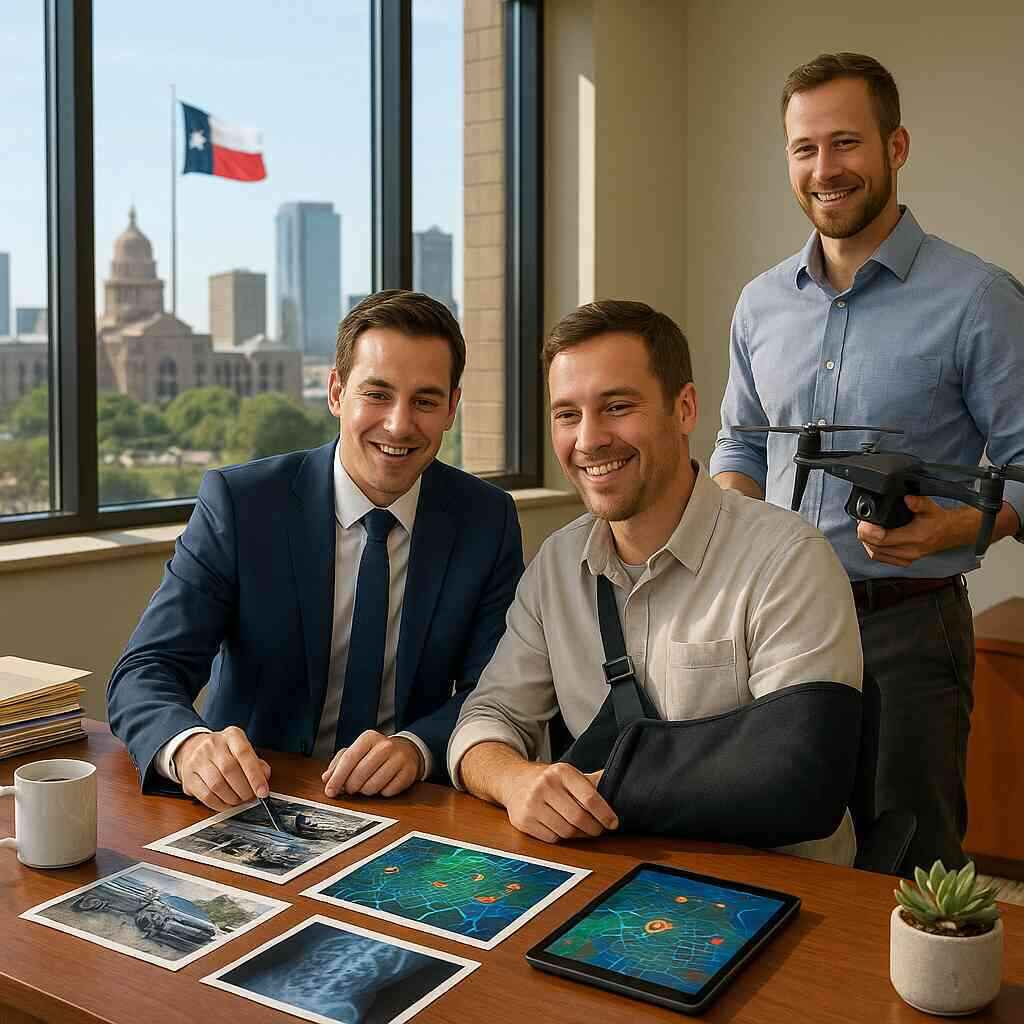 Commanding the Texas Personal Injury Battlefield
Understanding comparative negligence and keeping your cause of action alive
Texans injured in a motor vehicle accident must grasp the state’s modified comparative negligence doctrine before negotiations begin. If an insurance company persuades a jury that you bear over 50 percent fault, your personal injury claim collapses. Seasoned counsel from Personal Injury Law Locator builds timelines, witness affidavits, and roadway reconstructions that chip away at any alleged contributory fault. These attorneys also identify every potential defendant, ensuring no viable cause of action remains dormant. For background on the elements of fault, see the widely cited definition of the legal concept of negligence explained.
Comparative negligence arguments often pivot on subtle facts, including speed, following distance, and brake-light functionality. Your legal team cross-examines responding officers, retrieves 911 transcripts, and reviews dash-cam metadata to lock each variable into place. By reframing events through expert accident-reconstruction testimony, they transform scattered details into a cohesive liability narrative. This proactive stance prevents insurers from shifting blame piecemeal. Keeping the burden where it belongs preserves full economic and non-economic damages for the injured party.
Statute of limitations pressure points for every type of injury claim
Texas imposes unforgiving filing deadlines that vary by injury category, so calendaring errors become fatal quickly. A car accident lawsuit usually demands filing within two years, while certain workplace injury claims require even faster administrative action. Personal Injury Law Locator’s case-management dashboards trigger automated reminders, preventing deadline shock. Clients receive easy-to-read timelines that highlight medical malpractice prerequisites, wrongful death notice rules, and governmental immunity traps. For a broader procedural context, browse the platform’s latest insights on injury litigation before paperwork piles up.
Deadline discipline also safeguards negotiating leverage because adjusters lose stalling power when trial dates loom. As limitation periods narrow, insurers often pivot from denial to realistic settlement offers. Your attorney can strategically file suit days before expiration to preserve rights without abandoning talks. This tactic pressures carriers while protecting your maximum damages window. Missing even one statutory cutoff, however, erases leverage entirely and hands victory to the defendant.
Securing evidence after a motor vehicle accident from photos to black-box data
Evidence collection begins at the crash scene and continues until the closing arguments, yet critical data disappears within hours. Locator-vetted lawyers rush accident reconstructionists to document skid marks, impact angles, and road signage before the weather erodes proof. They preserve event-data-recorder downloads that reveal speed, braking, and seat-belt usage seconds before collision. Those black-box readings often neutralize driver excuses and increase settlement value. For additional context on kinetic forces, consult this primer on understanding traffic collision dynamics.
Digital forensics teams also capture social-media posts from at-fault drivers that might prove impairment or distraction. Meanwhile, subpoenas secure dispatch logs, intersection camera footage, and trucking company maintenance records. Chain-of-custody protocols keep every artifact admissible, blocking defense objections. Timely evidence retention curtails speculative arguments and strengthens causation links between crash forces and physical injuries. Comprehensive proof packages frequently compel insurance companies to resolve claims without trial.
Documenting medical treatment and recovering lost wages the right way
Medical professionals create the foundation for every damage calculation, so consistent treatment cannot be delayed. Your personal injury attorney schedules orthopedic consults, diagnostic imaging, and neurological evaluations to map the full arc of recovery. Each bill, pharmacy receipt, and therapy invoice becomes a building block for special damages. Wage-loss verification requires employer statements, pay stubs, and sometimes vocational expert opinions to quantify diminished earning capacity. Courts also recognize household-service replacement costs when injuries prevent basic chores, expanding economic recovery.
Proper documentation fuels negotiations because insurers respect organized, verifiable numbers. Attorneys employ spreadsheet software that ties each charge to accepted coding guidelines, foiling carrier objections. They then contrast these losses with pain-journal entries to justify non-economic multipliers. Reviewing the types of compensatory damages in lawsuits clarifies why meticulous recordkeeping boosts final payouts. Thorough evidence persuades mediators and jurors alike, anchoring emotional narratives in concrete figures.
Negotiating with Texas insurance companies and spotting bad faith tactics
Texas law penalizes carriers that engage in unfair settlement practices, yet adjusters still test unrepresented claimants. Common tactics include lowball offers, deliberate delays, and misstatements of coverage limits. Personal Injury Law Locator pairs each injured person with a personal injury lawyer skilled at exposing these maneuvers. They cite statutory penalty provisions during demand-letter exchanges, shifting the cost-benefit analysis against delay. Comparative claim-valuation software further highlights disparities and supports counteroffers grounded in precedent.
A legal team also leverages recorded statements to trap adjusters contradicting earlier positions. When foot-dragging persists, attorneys file bad faith counts, expanding potential recovery beyond policy limits. Negotiations frequently resolve after insurers realize that continued obstruction risks punitive exposure. For a deeper dive into carrier playbooks, explore this guide on comparing insurer strategies on claims. Mastering these dynamics converts insurer hesitation into client advantage.
Leveraging expert witnesses in medical malpractice and dram shop cases
Medical malpractice litigation in Texas demands expert-report filings that comply with tight statutory criteria. Locator-affiliated law firms maintain rosters of board-certified specialists who articulate breach of standard-of-care opinions. Their affidavits translate complex procedures into juror-friendly narratives, demonstrating exactly how deviations caused physical injury. In dram shop cases, toxicologists and bartending protocol experts trace alcohol service decisions that led to drunk-driving catastrophes. Strategic witness selection builds courtroom credibility and pressures defendants to negotiate.
Expert testimony also clarifies future medical needs, ensuring settlement projections cover lifelong care. Actuarial economists often translate those treatment plans into present-value figures, anchoring non-economic demands. By integrating these insights, attorneys present airtight damages models during mediation. For additional perspective on evidence amplification, explore methods for enhancing legal outcomes with locator tools. Comprehensive expert rosters distinguish elite representation from generic advocacy.
Maximizing settlement offers through mediation and contingency fee leverage
Mediation succeeds when both parties view compromise as rational, so attorneys cultivate negotiating leverage early. Detailed liability proofs, medical chronologies, and projected wage losses corner insurers into realistic math. Contingency fee structures further sharpen pressure because legal teams only earn when clients prevail. This alignment motivates aggressive discovery and discourages premature capitulation. Mediators witnessing such preparedness often push carriers toward policy-limit resolutions.
Settlement dynamics also hinge on timing; offers peak when trial costs loom. Attorneys may schedule mediation immediately after key deposition victories, exploiting momentum. Structured settlements sometimes resolve future medical expenses while preserving government benefit eligibility. When appropriate, attorneys incorporate high-low agreements to hedge risk without undermining upside potential. For deeper playbooks, review the article on advanced tactics for injury claims unlocked.
Overcoming rural Texas accident claim challenges and premises liability pitfalls
Remote crash sites stretch emergency response times and complicate evidence collection, yet Locator-curated lawyers adapt quickly. They hire local investigators familiar with county clerks and marshal drone photography when cell reception fails. These professionals also know which rural judges favor pretrial conferences, expediting hearings. When collisions occur near state borders, counsel coordinates with neighboring jurisdictions, sometimes collaborating with motor-vehicle claim advocates in New Mexico for cross-border discovery.
Premises liability cases present their own traps, particularly on ranches and oilfields where property owners assert open-and-obvious hazards. Attorneys counter with maintenance logs, OSHA citations, and industry-standard safety manuals to demonstrate negligence. They also investigate third-party contractors who may share liability, broadening available insurance coverage. This multifaceted approach maximizes recovery while acknowledging Texas’s recreational-use statutes and agricultural exemptions. Mastery of rural nuances converts logistical obstacles into settlement catalysts.
Victory Lap Conclusion
Turning emotional distress into empowered action with the right legal team
Emotional distress can feel paralyzing after a motor vehicle accident, yet the right legal team converts anguish into purpose-driven momentum. Personal Injury Law Locator assigns a personal injury attorney who listens first, then maps a clear recovery trajectory that respects both physical injuries and mental strain. By documenting sleepless nights, missed family events, and therapy sessions, your lawyer ensures non-economic damages receive full valuation. Texans living near the Red River can even lean on our network for seamless referrals to trusted personal injury counsel in Oklahoma when multi-state defendants complicate jurisdiction. This border-crossing collaboration keeps every cause of action alive while easing the emotional burden on the injured party.
A compassionate legal representative also buffers you from aggressive insurance company tactics that often magnify stress levels. Contingency fee arrangements eliminate upfront attorney fees, letting you prioritize medical treatment without financial panic. Your personal injury lawyer tracks each deposition, filing, and hearing so you can focus on rehabilitation rather than procedural noise. Regular status updates transform uncertainty into informed confidence, which is a powerful antidote to anxiety. These layered protections turn emotional turbulence into empowered advocacy, giving you control over both the narrative and the outcome.
Next steps to find a personal injury lawyer near you in Texas today
Begin by gathering every document that tells your story: crash photos, medical bills, wage-loss statements, and pain journal entries. Upload them through Personal Injury Law Locator’s secure dashboard; the platform immediately benchmarks your claim against verdict data and comparable settlement negotiations during litigation outcomes. Within moments, you receive a shortlist of vetted Texas attorneys who match your case type, location, and language needs. Schedule a free consultation to discuss strategy, ask about case timelines, and confirm the contingency fee percentage. This proactive approach preserves evidence, protects filing deadlines, and positions you for maximum compensation.
Personal Injury Law Locator updates its statewide roster daily, ensuring fresh talent is always a click away. Law firms that share our commitment to client empowerment can add your law firm listing today and join a community dedicated to justice. For injured Texans, this ever-growing network means faster matches, deeper resources, and specialized counsel for complex injuries such as nursing home abuse or workplace accidents. Whether you need a Houston personal injury lawyer, Dallas wrongful death guidance, or a San Antonio truck accident legal team, the Locator delivers options in seconds. Tap the platform now to transform uncertainty into decisive legal action.
Frequently Asked Questions
 Frequently Asked Questions
Question: How quickly do I need to act after a Texas car accident to protect my personal injury claim?
Answer: Time is critical. Texas imposes a two-year statute of limitations on most motor vehicle accident claims, and evidence such as skid marks, dash-cam footage, and event-data-recorder files can vanish within days. By submitting your crash photos and medical bills through Personal Injury Law Locator’s secure dashboard the same day-or as soon as possible-you trigger an immediate match with a top Texas personal injury lawyer. That attorney can dispatch investigators, lock down black-box data, and shield you from insurance company recorded-statement traps, preserving every cause of action and maximizing your settlement options.
Question: What makes Personal Injury Law Locator the best way to find a personal injury lawyer near you in Texas?
Answer: The locator is more than a directory. It is a statewide data engine that benchmarks your injuries and property damage against thousands of prior Texas verdicts. Within seconds it delivers a curated list of Houston, Dallas, San Antonio, Austin, or rural counsel who have proven success with car accidents, truck accidents, wrongful death, medical malpractice, and workplace injury cases. Because every featured law firm works on a contingency fee basis, you pay no attorney fees unless money is recovered, giving you immediate, risk-free access to elite legal representation.
Question: How does Personal Injury Law Locator help me secure and organize evidence like black-box data after a crash?
Answer: Once you connect through the platform, your matched Texas injury attorney can file preservation letters with trucking companies, request vehicle event-data-recorder downloads, and hire accident-reconstruction experts who reach the scene before weather or towing destroys proof. All photos, police reports, and medical treatment records you upload are time-stamped and stored in a cloud vault that feeds directly into demand-letter software. This seamless chain of custody turns raw data into persuasive exhibits that insurance companies respect during negotiation or trial.
Question: Why is understanding comparative negligence in Texas essential, and how can Personal Injury Law Locator keep my claim alive as explained in How to Leverage Injury Law in Texas with Locator’s Guide?
Answer: Texas follows a modified comparative negligence rule-if you are found more than 50 percent at fault, you recover nothing. The blog outlines how fast-acting counsel can dismantle insurer blame-shifting. Attorneys sourced through Personal Injury Law Locator build detailed timelines, interview witnesses, and present expert testimony that limits your percentage of fault, preserving full economic and non-economic damages. By leveraging these Texas personal injury law tips early, you maintain negotiating power and avoid having your award slashed by comparative negligence arguments.
Question: Does Personal Injury Law Locator charge any upfront fees, and how does the contingency fee structure benefit injured Texans?
Answer: No upfront costs ever reach your pocket. Every personal injury lawyer in our Texas network works on a contingency fee, meaning they advance investigation expenses and only receive payment when they win or settle your personal injury lawsuit. This arrangement aligns the legal team’s incentives with yours, encourages aggressive pursuit of maximum compensation for medical bills, lost wages, and emotional distress, and removes the financial barrier that often keeps injured parties from hiring top-tier representation.