 Posted On: 02/14/2026
Unlocking Safe Grounds: The Premises Liability Checklist Advantage
Understanding the duty of care for property owners and invitee legal protections
Property owners shoulder a legal duty of care that cannot be ignored. Invitees, such as shoppers or tenants, deserve reasonably safe surroundings at every turn. When a hazard exists, the owner must either repair it swiftly or issue a clear warning. Failure to act converts an everyday mishap into a viable cause of action under any robust premises liability checklist. Courts often analyze whether the property owner knew, or should have known, about the unsafe condition.
Plaintiffs also benefit from specific invitee legal protections embedded within state codes and common law. These rules require owners to inspect regularly, document maintenance, and adhere to building codes. Ignoring those safeguards can establish negligent maintenance injuries and open the door to civil cases. Even where comparative negligence exists, defendants still shoulder a substantial portion of responsibility if foreseeability is proven. Understanding these principles prepares an injured party for successful negotiation or litigation.
The role of Personal Injury Law Locator in finding a personal injury lawyer near you
Navigating a slip and fall claim guide alone can overwhelm an injured person already battling physical injuries and emotional distress. Personal Injury Law Locator bridges that gap by matching victims with experienced counsel in moments. Its nationwide reach ensures you can personal injury locator platform and quickly identify counsel versed in hazardous conditions lawsuits. Because the service screens each law firm for premises experience, you gain instant access to a legal team capable of maximizing compensation.
A contingency fee premises attorney located through the platform refuses payment unless you win, lowering financial barriers to justice. These attorneys promptly launch evidence gathering, obtain building code records, and confront insurance company strategies. Their involvement preserves crucial surveillance footage before it vanishes. By leaning on seasoned advocates, injured parties remain focused on medical treatment while professionals tackle insurance claims and negotiations. Using the platform saves time, minimizes stress, and boosts the odds of a fair premises liability settlement.
Common hazardous conditions that lead to premises claims from snow and ice to elevator malfunctions
Hazardous conditions manifest in many guises, and each presents unique legal complexities. Accumulated snow and ice near entryways quickly transform into slip hazards when owners neglect timely removal. Wet floor spills in grocery aisles likewise cause injuries when staff fail to display warning signs. Uneven sidewalks, broken stair treads, and loose carpeting can all cause unsuspecting visitors to fall.
Mechanical defects also underlie numerous premises cases. Elevator and escalator malfunction injuries often stem from ignored maintenance schedules or outdated safety systems. Poor lighting in parking garages fosters inadequate security assault liability, especially when past incidents made danger foreseeable. Swimming pool accidents multiply when gates lack childproof latches, triggering attractive nuisance claims involving children. Recognizing these risks helps both owners and visitors adhere to a proactive premises liability safety inspection list.
On Site Observations and Evidence Gathering Master List
Documenting accident scene photos and completing an incident report
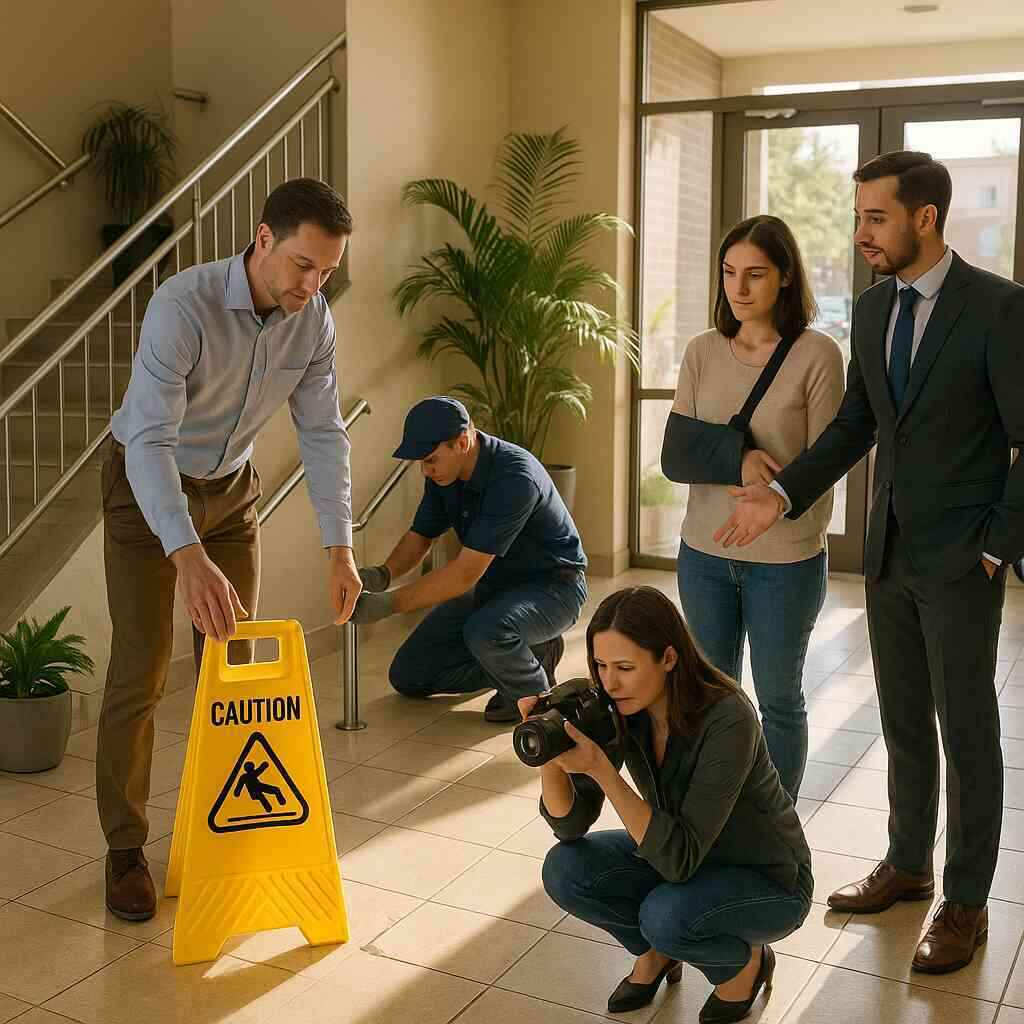
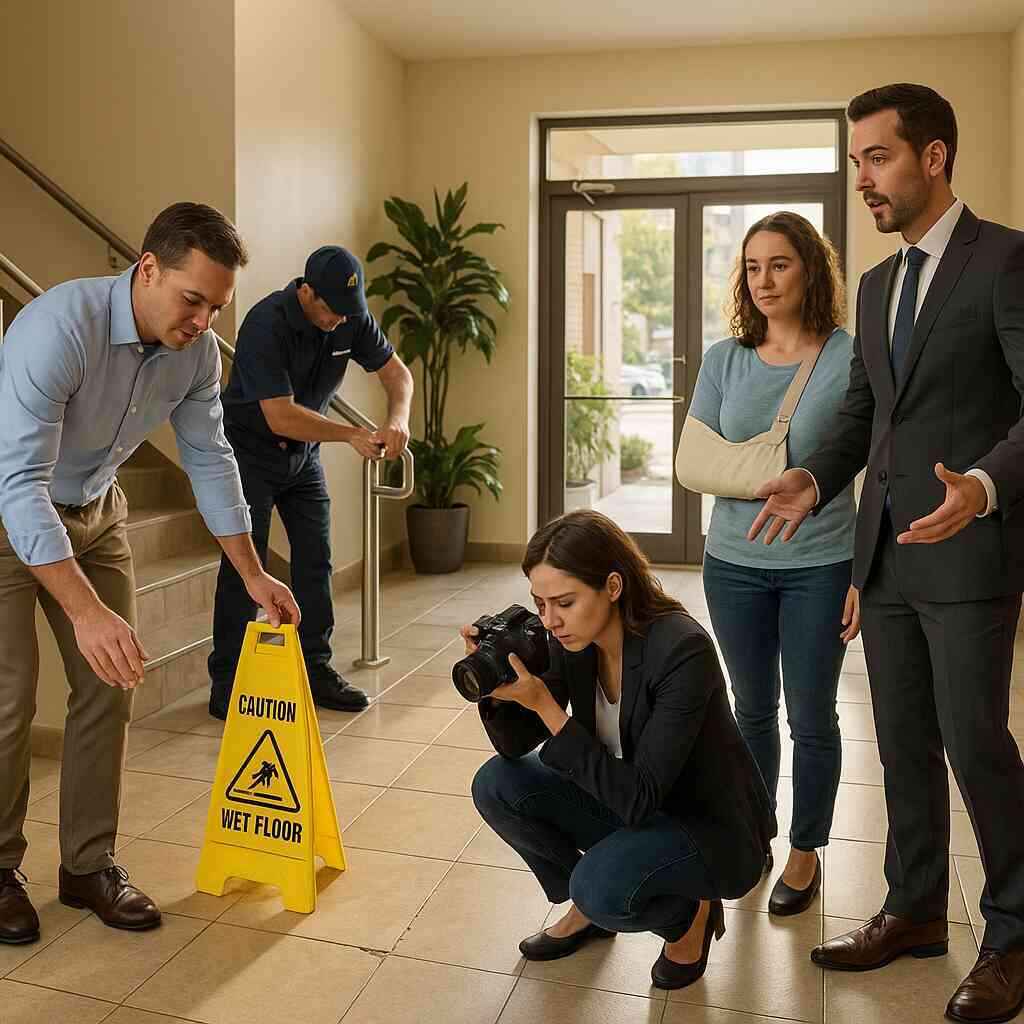
Photographs freeze the hazardous condition in time, capturing proof before a property owner repairs or obscures it. For a comprehensive premises liability checklist, start with wide-angle shots to establish overall layout, then move closer to record broken tiles, pooled water, or missing handrails. Angle the camera low to reveal depth, height, and perspective, because insurers often dispute how dangerous the surface truly looked. Immediately after snapping images, request a written incident report from the manager on duty and verify that it lists every visible defect. Consistent documentation bolsters a personal injury claim by demonstrating that the duty of care for property owners was breached in plain sight.
The incident report should note weather conditions, lighting quality, and any safety cones-or lack thereof-near the danger. Ask the employee preparing the form to include their full name, position, and contact information for later deposition. Politely correct any factual errors before signing so the defense cannot exploit vague language. Keep a personal copy; do not rely on the business to forward documents promptly. These organized records empower a personal injury lawyer near you to align photographs with narrative evidence, making negligent maintenance injuries easier to prove. Effective early steps also pressure the insurance company to negotiate from a weaker position.
Securing surveillance footage and collecting witness statements for premises accidents
Surveillance footage often functions as the decisive element validating a slip and fall claim guide. Therefore, act quickly; most security systems overwrite data within days. Provide the owner or manager with written notice to preserve video of every camera angle covering the accident window, including entrances and hallways. If hesitation arises, send a certified letter through counsel so the request carries legal weight. Courts may impose spoliation sanctions if footage later disappears, which can tilt liability toward the defendant.
While waiting, speak respectfully with bystanders who saw the event or the unsafe condition just beforehand. Gather full names, phone numbers, and concise descriptions of what they observed, emphasizing the importance of accuracy. Witness statements for premises accidents should note any warnings or absence of warnings provided by staff. Independent voices counter arguments that the injured party simply “wasn’t watching where they walked.” When Personal Injury Law Locator connects you with experienced counsel, those witnesses can later supply sworn affidavits, reinforcing foreseeability and weakening comparative negligence defenses.
Reporting an accident to a landlord or property manager without weakening your personal injury claim
Notifying a landlord demonstrates good faith and ensures hazardous areas are remedied, protecting others from harm. However, choose words carefully when explaining what happened so you do not inadvertently assume blame. Stick to observable facts-location, time, and visible defects-while avoiding speculative phrases such as “I wasn’t paying attention.” If asked to provide a written statement, keep it brief and avoid discussing physical injuries until a medical evaluation confirms their extent.
Submit the notice in writing and request confirmation of receipt to construct a paper trail reflecting prompt reporting. Simultaneously, do not agree to recorded interviews with their insurer before consulting an injury attorney near me sourced via Personal Injury Law Locator. Adjusters may exploit early conversations to minimize payouts or shift fault. By maintaining control of communications, you guard your civil lawsuit from damaging contradictions and preserve leverage during settlement talks.
Prioritizing medical evaluation after a slip and tracking medical bills for proof of injury
Medical attention should follow immediately after gathering scene evidence; untreated injuries undermine both health and compensation. Emergency physicians document objective findings like bruises, fractures, and concussion symptoms that frequently worsen overnight. Request copies of imaging studies, discharge summaries, and recommended treatment plans so every visit builds a chronology linking the accident to the injury. These records show that physical injuries were neither preexisting nor exaggerated.
Create a dedicated folder for hospital invoices, prescriptions, and therapy receipts to demonstrate mounting costs. Meticulous tracking of medical bills supports claims for lost wages and non-economic damages such as emotional distress. Forward duplicates to your legal team, enabling them to calculate future expenses and negotiate assertively with insurance companies. Prompt evaluation also defuses defense arguments that gaps in treatment indicate trivial harm, strengthening the overall premises injury evidence gathering strategy.
 Legal Mechanics and Case Building Essentials
 Legal Mechanics and Case Building Essentials
Proving foreseeability and negligent maintenance through building code violations
Property owners must follow every local and national safety statute that applies to their premises. When they ignore a clear requirement, courts see strong evidence of negligent maintenance injuries. For example, missing handrails or inadequate lighting often violate explicit construction rules. These failures also support proving foreseeability in a premises case because danger was an obvious result. Your legal team will compare accident photos with official code language to establish that link.
Attorneys sourced through Personal Injury Law Locator routinely subpoena inspection records and past citations. They also request maintenance logs to show a recurring pattern of neglect. If the owner previously promised repairs, that pledge underscores liability. Even a seemingly minor defect can become pivotal once a building official declares it noncompliant. For deeper insight, visit the blog on building code violations causing injury.
Comparative negligence in premises cases and its impact on compensation
Not every premises dispute ends with one side holding total blame. Comparative negligence in premises cases allows juries to divide fault between the owner and the injured party. Suppose a stairwell lacked lighting, yet the visitor also bypassed a posted warning. Courts might allocate partial responsibility to each person. However, as long as the plaintiff remains below the jurisdictional threshold, monetary recovery still occurs. Skilled attorneys fight to limit any reduction in damages.
Insurance companies love using comparative arguments to shrink payouts. They may claim you wore unsuitable footwear or looked at a phone. Documentation gathered earlier counters those claims with objective details. Experienced lawyers further reference local precedent to predict likely fault percentages. If you need state-specific guidance, review advice from personal injury attorneys in Texas.
Statute of limitations for property injuries and the timely filing of a civil lawsuit
Every state imposes a statute of limitations for property injuries that strictly governs filing windows. Miss that cutoff and the right to sue disappears, regardless of evidence quality. Lawyers therefore act quickly, calculating deadlines from the accident date or from injury discovery where rules allow. Early filing also preserves witness memories while details remain fresh. Timeliness shows seriousness and pressures the defense to engage.
Certain circumstances can pause the ticking clock, yet courts interpret exceptions narrowly. Minors, for instance, often receive extended periods before limitation periods start. Nonetheless, waiting remains risky since evidence can fade. Discuss tolling possibilities with counsel as soon as possible. For a fuller breakdown, scan the guide on timely civil lawsuit filing.
Expert testimony in premises claims including medical professionals and safety engineers
Complex premises cases frequently hinge on expert testimony in premises claims. Medical professionals translate radiology images and surgical reports into clear explanations for judges and jurors. Their objective analysis debunks insurer accusations of preexisting conditions. Similarly, safety engineers assess floor friction coefficients or elevator mechanics. They explain how design flaws lead directly to injuries, reinforcing arguments about building code violations causing injury.
Expert witnesses also influence settlement negotiations before trial. Well-credentialed specialists intimidate insurers who fear persuasive courtroom performances. Attorneys retain these professionals early, allowing thorough site inspections and testing. Reports then anchor damages calculations for lost wages and ongoing care. You can explore additional strategies in the expert testimony overview.
Special scenarios attractive nuisance claims involving children and inadequate security assault liability
Children lack adult judgment, so the law offers extra protection through attractive nuisance claims involving children. Swimming pools, construction pits, or vibrant machinery can lure kids onto private land. Owners must install barriers, alarms, or warning signs to reduce temptation. Failure to do so establishes liability even when trespass occurs. Personal Injury Law Locator connects parents with lawyers experienced in these delicate situations.
Premises cases also cover inadequate security assault liability. If prior assaults happened nearby, property managers must enhance lighting, cameras, and patrols. Ignoring that history makes violent harm foreseeable. Victims may recover medical bills, emotional distress damages, and future therapy expenses. Residents can learn more by browsing resources supplied by personal injury lawyers in Florida.
Stepping Forward With Confidence Toward Fair Compensation
Calculating lost wages and non-economic damages for physical injuries and emotional distress
Employers usually record every hour you miss because of your accident. Your legal team gathers those pay stubs to establish lost wages from premises injuries. Tax returns and direct-deposit statements further reinforce the calculation, leaving insurance companies little room for dispute. Experienced attorneys also project future earnings when doctors restrict their duties or force a career change. By turning hard numbers into persuasive exhibits, counsel demonstrates the financial hit caused by another’s negligence.
Money alone cannot capture night terrors, chronic pain, or the humiliation of visible scars. Calculating non-economic damages therefore blends medical testimony, psychological evaluations, and daily impact journals. Courts often use multipliers that compare intangible suffering to documented medical bills. A seasoned lawyer argues for higher multipliers when injuries disrupt family life or lifelong hobbies. For deeper guidance, review the firm’s guide to valuing pain and suffering.
Negotiating a premises liability settlement while countering insurance adjuster tactics
Adjusters rarely open negotiations with a fair figure because their loyalty rests with the insurance company, not the injured party. They may downplay hazardous conditions or insist you share most blame. Your attorney counters those insurance adjuster tactics on premises claims by presenting organized photographs, witness affidavits, and maintenance logs. Each piece of evidence shrinks the adjuster’s ability to dispute liability, pushing the conversation toward realistic numbers. Staying calm and methodical deprives them of leverage built on emotional pressure.
Timing also matters during settlement talks. Lawyers often wait until maximum medical improvement, so future expenses become clearer and harder to contest. When adjusters threaten to “close the file,” counsel calmly cites the slip and fall claim guide principles that courts apply. That professional confidence signals readiness for trial, motivating higher offers. If you live in the Northeast, our network connects you with premises attorneys in New York who excel at these strategic exchanges.
How a contingency fee premises attorney from Personal Injury Law Locator maximizes recovery
A contingency fee premises attorney removes financial barriers by advancing all litigation costs until the case resolves favorably. That arrangement aligns attorney fees with client success, ensuring the legal team fights relentlessly for every available dollar. Because payment depends on results, counsel invests in expert testimony, focus groups, and advanced graphics that clarify building code violations. Those resources intimidate defense firms that know juries respond to compelling visuals.
Personal Injury Law Locator screens every participating law firm for proven verdicts and strong client feedback. Once matched, you gain direct access to partners rather than junior staff. Regular updates keep you informed while freeing time for medical treatment and emotional healing. Clients in the West frequently trust our California premises liability lawyers to deploy that high-powered, risk-free model. The outcome often surpasses early settlement offers whispered by insurers hoping you never seek representation.
Final premises liability safety inspection list for both property owners and injured parties
Proactive measures reduce accidents long before litigation enters the picture. Property owners should inspect walking surfaces weekly, promptly repair loose tiles, and document every maintenance step. Adequate lighting, visible warning signs, and secure handrails turn potential claims into non-events. Owners must also verify that snow and ice removal crews follow strict schedules during cold months. By keeping organized logs, they generate proof of reasonable care.
Visitors can protect themselves as well. Scan entryways for wet floors, uneven thresholds, or missing safety barriers. If you spot a danger, alert management immediately and photograph the scene for your personal premises liability safety inspection list. Carry shoes with reliable traction and avoid multitasking while walking. For a printable checklist that blends both perspectives, explore our premises safety resource hub.
Frequently Asked Questions
 Frequently Asked Questions
Question: How does Personal Injury Law Locator’s premises liability checklist help me gather evidence like documenting accident scene photos and securing surveillance footage?
Answer: The checklist walks you through a step-by-step premises injury evidence gathering plan the moment a hazard strikes. It reminds you to snap wide-angle and close-up accident scene photos, complete an incident report, and send a written notice to preserve surveillance footage before it is overwritten. Because Personal Injury Law Locator immediately pairs you with a personal injury lawyer near you, that attorney can issue formal preservation letters, collect witness statements for premises accidents, and organize every image into a compelling hazardous conditions lawsuit. The result is a well-documented file that insurance companies struggle to dispute.
Question: What immediate actions should an injured party take after a slip and fall, according to the Premises Liability Checklist from Personal Injury Law Locator?
Answer: First, photograph the hazard, complete the property’s incident report, and obtain contact information for any witnesses. Next, notify the landlord or manager in writing while avoiding language that admits fault. Seek prompt medical evaluation after a slip so doctors can link physical injuries to the event and create a record of medical bills. Finally, contact Personal Injury Law Locator to retain a contingency fee premises attorney who will guard you from insurance adjuster tactics on premises claims and ensure you meet every statute of limitations for property injuries.
Question: Can Personal Injury Law Locator connect me with a contingency fee premises attorney who understands comparative negligence in premises cases?
Answer: Yes. Our nationwide platform screens law firms for deep experience with the duty of care for property owners, comparative negligence rules, and negotiating a premises liability settlement. These attorneys work on a contingency fee basis, meaning they advance costs such as expert testimony in premises claims and only collect fees when you recover lost wages from premises injuries and noneconomic damages. Their familiarity with state-specific fault percentages keeps more money in your pocket even if a jury assigns you partial responsibility.
Question: How long do I have to file a hazardous conditions lawsuit, and will your network ensure my claim meets the statute of limitations for property injuries?
Answer: Each state sets a strict filing window-often two to four years-for premises liability. Miss it and your cause of action disappears. The moment you register with Personal Injury Law Locator, a local legal team calculates your exact deadline, evaluates tolling exceptions, and files suit well before the statute of limitations expires. Early filing also preserves witness memories, building code violation records, and elevator or escalator maintenance logs essential for proving foreseeability in a premises case.
Question: What role do expert testimony and building code violations play in maximizing a premises liability settlement through Personal Injury Law Locator?
Answer: Safety engineers, architects, and medical professionals translate complex facts into clear proof of negligent maintenance injuries. They measure floor friction, highlight missing handrails, and explain how those building code violations directly caused your physical injury and emotional distress. Personal Injury Law Locator’s vetted attorneys invest in these experts, strengthening negotiation leverage and driving insurance companies toward higher settlements. When defendants see that a credible expert can testify, they often prefer settlement over the risk of trial.