 Posted On: 04/07/2026
Navigating the Surge in Holiday Traffic and Risk
The unofficial start of summer brings a massive migration of vehicles onto our nation’s roads. This holiday weekend consistently sees a significant increase in travel volume, which directly correlates with a troubling spike in motor vehicle accidents. Families and friends embark on long-awaited trips, creating a perfect storm of congested highways, unfamiliar routes, and sometimes, impaired judgment. Consequently, the risk of serious personal injuries, property damage, and even wrongful death escalates dramatically during this period. Understanding this heightened risk is the first critical step in adopting a proactive mindset for holiday weekend accident prevention.
Understanding the Statistical Spike in Holiday Weekend Accidents
Data from traffic safety organizations reveals a sobering truth about holiday travel. These weekends often see accident rates that surpass typical weekly averages, with factors like alcohol consumption, driver fatigue, and sheer traffic volume playing major roles. The increased density of vehicles reduces reaction time and amplifies the consequences of any single mistake. For a driver, this statistical reality translates into a tangible threat on the road, one that necessitates heightened awareness and preparation. Recognizing this pattern is meant to empower drivers with knowledge. This awareness forms the foundation of effective Memorial Day driving safety tips designed to protect you and your loved ones.
Why Memorial Day Presents Unique Driving Challenges
Memorial Day combines several high-risk elements that distinguish it from ordinary travel. First, the celebratory nature of the holiday often involves alcohol, elevating the dangers of impaired driving. Second, many travelers cover long distances to reach destinations, increasing the likelihood of fatigue and drowsy driving. Third, summer weather can be unpredictable, with sudden pop-up storms creating hazardous driving conditions. Furthermore, roads are filled with a mix of commuters, vacationers, and commercial trucks, all with different pacing and destinations. This unique confluence of factors demands a specific and robust set of defensive driving techniques to navigate safely.
The Personal Injury Law Locator’s Mission for a Safer Holiday
At Personal Injury Law Locator, we witness the devastating aftermath of preventable holiday accidents far too often. Our mission extends beyond connecting injured parties with exceptional legal representation; we are committed to proactive education and injury prevention. We believe that informed drivers are safer drivers. This guide is part of our dedication to empowering you with expert-backed personal injury tips to mitigate risk. However, should the unexpected occur, our network stands ready to help you secure the compensation you rightfully deserve for medical bills, lost wages, and emotional distress. Our goal is a holiday where memories are made, not marred by tragedy.
1 – The Pre-Trip Diagnostic: A Foundational Vehicle Safety Check
A journey’s safety is fundamentally determined before the vehicle even leaves the driveway. Conducting a thorough vehicle safety check before a trip is the most impactful action you can take to prevent mechanical failures that lead to accidents. This diagnostic process addresses the most common failure points that are exacerbated by long-distance travel and summer heat. A well-maintained vehicle responds predictably in emergency situations, giving you critical control. Neglecting this step not only risks a breakdown but can transform a minor incident into a catastrophic motor vehicle accident. Dedicate time to this pre-trip ritual; it is an investment in your family’s security.
Ensuring Proper Brake Function and Fluid Levels
Your vehicle’s braking system is its most important safety feature, and it must be in peak condition for heavy holiday traffic. Begin by checking the brake fluid reservoir, ensuring it is filled to the appropriate level with clean fluid. Listen for any unusual grinding or squealing noises when braking, as these can indicate worn pads or rotors. The brake pedal should feel firm and not sink to the floor when constant pressure is applied. Ensuring proper brake function is non-negotiable for navigating sudden stops in congestion or reacting to erratic drivers. If you have any doubts, a professional inspection from a trusted mechanic is a wise decision before embarking on a long trip.
Checking Tire Pressure and Tread Depth for Summer Heat
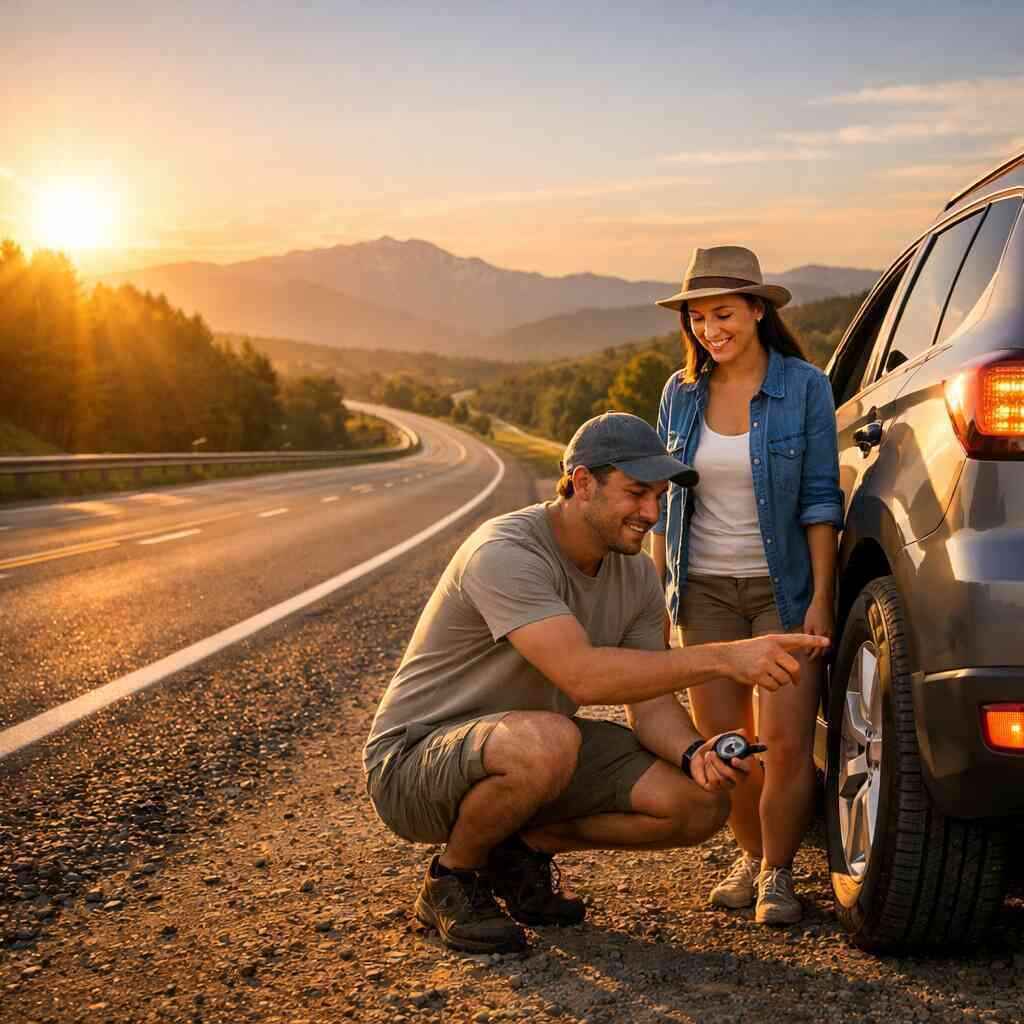
Tires are your only point of contact with the road, making their condition paramount for safe travel. The summer heat causes air inside tires to expand, which can lead to dangerous over-inflation and increase the risk of a blowout, especially at highway speeds. Use a reliable gauge to check tire pressure when the tires are cold, adjusting to the manufacturer’s recommended PSI found in your door jamb or manual. Equally critical is inspecting tread depth; worn tread severely compromises traction on wet roads, a key component of weather preparedness for summer driving. The penny test is a simple check: insert a penny into the tread with Lincoln’s head upside down. If you can see the top of his head, your tread is too low. Checking tire pressure and tread is a fundamental pillar of holiday weekend accident prevention.
Verifying Lights, Signals, and Windshield Wipers
Visibility is a two-way street: you must see and be seen. Walk around your vehicle to verify all lights are operational-headlights (high and low beams), brake lights, turn signals, and hazard lights. Properly functioning signals are essential for communicating your intentions to other drivers, a core aspect of defensive driving techniques. Next, inspect your windshield wipers; if they streak or chatter, replace the blades. Summer storms can arrive without warning, and clear visibility is imperative. Also, ensure your windshield washer fluid reservoir is full with a solution that can clear bugs and grime. These simple checks are often overlooked but are vital for safe operation in all conditions, from bright sun to torrential rain.
Packing a Comprehensive Roadside Emergency Kit
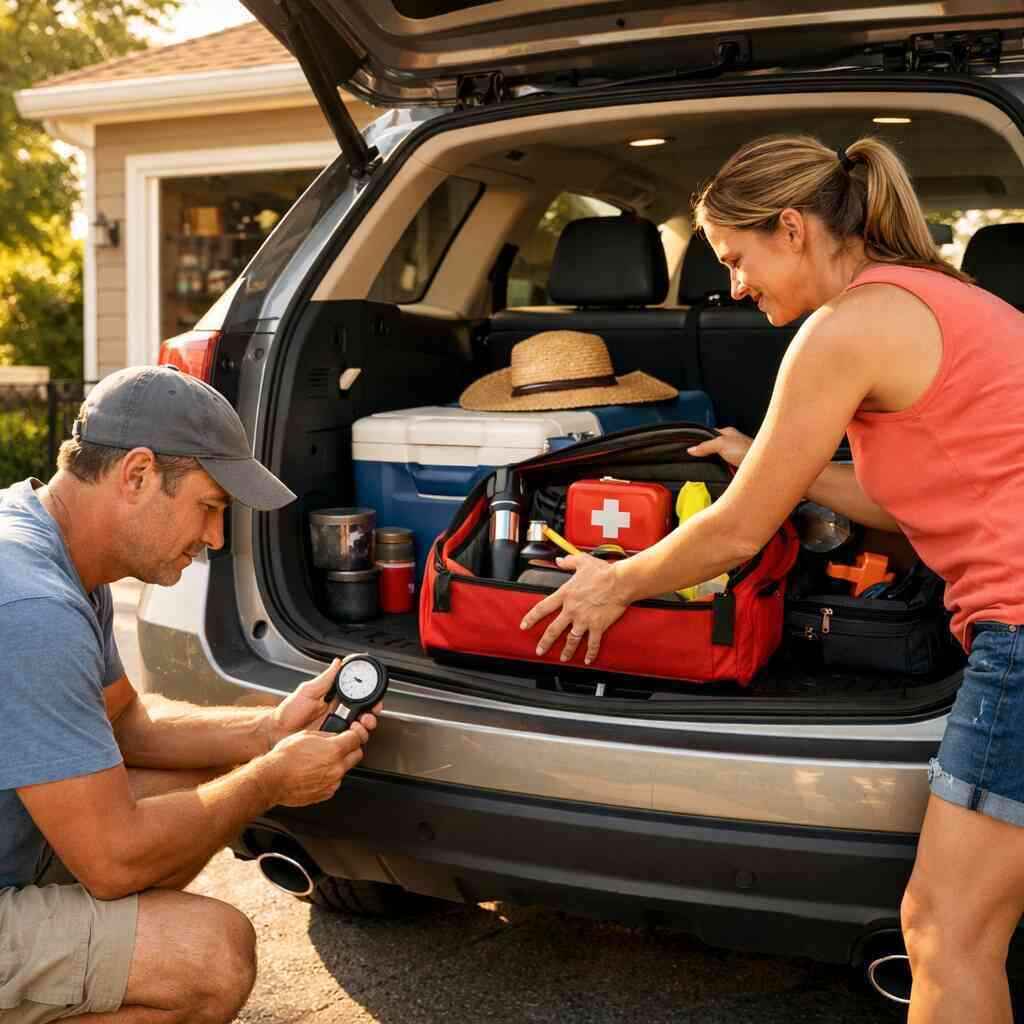
Even with meticulous preparation, breakdowns can happen. A well-stocked roadside emergency kit transforms a stressful situation into a manageable one. Your kit should include essentials like jumper cables, a flashlight with extra batteries, reflective warning triangles or flares, a basic first-aid kit, and a multi-tool. Include non-perishable snacks, water, and a portable phone charger. For summer travel, add extra coolant and a sunshade. Packing a roadside emergency kit demonstrates foresight and provides tangible resources if your vehicle fails. This preparedness allows you to handle minor issues safely while you wait for professional help, keeping you off the dangerous roadway and reducing risk.
2 – The Cognitive Shield: Mastering Defensive Driving Techniques
Defensive driving is the active practice of anticipating hazards and making safe decisions to avoid them. It is a mindset that places a buffer of time and space between you and potential danger on the road. During a hectic holiday weekend, this cognitive shield becomes your most valuable asset. It involves constantly scanning the environment, predicting the actions of other drivers, and never assuming others will follow the rules. By mastering these techniques, you take control of your safety irrespective of the errors made by others. This proactive approach is the hallmark of a responsible driver and is central to effective Memorial Day driving safety.
Maintaining a Safe Following Distance in Heavy Traffic
Tailgating is a primary cause of rear-end collisions, especially in stop-and-go holiday traffic. The standard three-second following rule is a minimum; in heavy traffic or poor weather, you should increase this to four or five seconds. To measure this, pick a stationary object on the roadside. When the car ahead passes it, start counting; you should not pass the same object until your count reaches three. Maintaining a safe following distance provides you with the crucial time needed to perceive a hazard, decide on a reaction, and execute a maneuver, such as braking or changing lanes. This buffer is your primary defense against chain-reaction crashes.
Proactive Scanning and Pedestrian and Cyclist Awareness
Your eyes should be in constant motion, scanning the road ahead, checking mirrors every 5-8 seconds, and monitoring your blind spots. Look 12-15 seconds down the road to identify potential problems early. In residential areas, near parks, and in downtown districts, pedestrian and cyclist awareness is critical. Warmer weather brings more people outdoors, and they may act unpredictably. Actively look for movement between parked cars, at crosswalks, and along road shoulders. Making eye contact with pedestrians when possible can confirm they see you. This heightened state of alert is a key defensive driving technique for summer that can prevent tragic accidents with vulnerable road users.
Understanding Right-of-Way Rules in Complex Intersections
Intersections are conflict points where paths cross, and misunderstandings about right-of-way are a common cause of accidents. While rules are standardized, their application in complex, multi-lane intersections or during traffic signal malfunctions can be confusing. The fundamental principle is to yield to avoid a collision, even if you technically have the right-of-way. Never assume another driver will yield to you. At four-way stops, proceed in the order of arrival; if simultaneous, yield to the driver on your right. Understanding right-of-way rules prevents the aggressive maneuvers that lead to sideswipe and T-bone collisions. When in doubt, the safest choice is to slow down and yield.
Strategies for Navigating Highway Merging and Construction Zones
Merging onto a busy highway requires cooperation and timing. Use the acceleration lane to match the speed of traffic, signal early, and look for a safe gap. Do not force your way in or come to a stop at the end of the lane. Conversely, when you are on the main highway, courteously adjust your speed or change lanes to allow merging traffic to enter smoothly. Construction zone safety protocols are equally vital. Always obey reduced speed limits, merge early when lanes close, and pay close attention to flaggers and signage. These areas often have uneven surfaces, narrowed lanes, and workers present, demanding your full attention and patience to navigate safely.
3 – The Zero-Tolerance Protocol: Eliminating Impaired and Distracted Driving
The choices you make behind the wheel regarding impairment and distraction are entirely within your control, and they carry the gravest consequences. Adopting a zero-tolerance protocol for these behaviors is the single most effective decision you can make for holiday safety. Impaired and distracted driving are not accidents; they are conscious decisions that disregard the safety of everyone on the road. This section outlines the stark realities of these choices and provides clear strategies for avoidance. Your commitment to a sober, focused drive protects not only your life but also the lives of innocent families sharing the highway with you.
The Grave Dangers of Impaired Driving During Celebrations
Alcohol and drugs severely impair judgment, reaction time, coordination, and vision-all critical skills for safe driving. The celebratory atmosphere of a holiday weekend often normalizes drinking, but it must never be mixed with driving. It is a catastrophic error to believe you can “handle it” or that a short drive is low-risk. The dangers of impaired driving during celebrations are well-documented and devastating. Even a small amount of alcohol can affect driving ability. The only safe choice is to designate a sober driver before any celebration begins, use a rideshare service, or stay the night. There is no excuse that justifies the risk of causing a fatal crash.
Combatting Distracted Driving: Avoid Phone Use and More
Distracted driving is any activity that diverts attention from the primary task of driving. While cell phone use is a major culprit, distractions also include eating, adjusting the radio, or interacting with passengers. A text message or social media update is never worth a life. Effective distracted driving avoidance methods start with putting your phone on “Do Not Disturb” mode and placing it out of reach. Program your GPS and music playlist before you start moving. Secure loose items that could roll around. If you must attend to something, pull over safely to a parking area. Your full cognitive focus must remain on the dynamic task of operating a vehicle.
Recognizing and Managing Fatigue and Drowsy Driving
Driver fatigue is a silent and deadly epidemic, particularly on long holiday drives. Drowsy driving impairs reaction time and decision-making similarly to alcohol. Warning signs include frequent yawning, heavy eyelids, drifting from your lane, missing exits, and not remembering the last few miles traveled. To combat fatigue and drowsy driving, ensure you are well-rested before your trip. Schedule breaks every two hours or 100 miles to stretch and refresh. Share driving duties with another licensed passenger if possible. If you feel drowsy while driving, the only safe response is to exit the highway and find a safe place to sleep. Caffeine is only a short-term stimulant and is not a substitute for sleep.
4 – The Passenger Safety Matrix: Securing Every Occupant
A driver’s responsibility extends to every person inside the vehicle. Ensuring the safety of all occupants is a legal and moral duty that requires active management. This involves not only the correct use of restraint systems but also maintaining an environment conducive to safe driving. Passengers, especially children, rely entirely on the driver’s diligence for their protection. A secure passenger is also a less distracting passenger, contributing to the overall safety of the journey. This matrix of protocols transforms your vehicle from a simple mode of transport into a protected environment, significantly reducing the risk of injury for everyone on board.
The Non-Negotiable Importance of Seat Belt Usage
Seat belts are the most effective safety device ever invented for preventing death and serious injury in a crash. Their use is the simplest, most impactful safety step you can take. Every occupant, in every seating position, must be buckled up before the vehicle moves. The importance of seat belt usage and the laws governing it are clear and uncompromising. Seat belts prevent ejection from the vehicle, which is often fatal, and they work in concert with airbags to properly restrain the body. As the driver, you must insist on compliance; make it a non-negotiable rule for your car. This single action dramatically increases survivability and reduces the severity of injuries for you and your loved ones.
Proper Installation and Use of Child Passenger Safety Seats
Children are not small adults; they require specially designed restraint systems. The correct installation and use of a child passenger safety seat is critical. Infants and toddlers must ride in a rear-facing seat until they reach the maximum height or weight limit allowed by the seat’s manufacturer. Older children then transition to a forward-facing harness seat, followed by a belt-positioning booster seat until the vehicle’s seat belt fits them properly. The seat must be installed tightly, with less than an inch of movement at the belt path, and the harness should be snug against the child. If you are unsure, seek a free inspection from a certified child passenger safety technician in your community.
Managing In-Car Distractions and Ensuring a Calm Environment
An agitated or overly excited passenger environment can dangerously distract the driver. It is important to set expectations for behavior before the trip begins, especially with children. Provide activities, snacks, and entertainment to keep passengers content. For adult passengers, engage in calm conversation and avoid heated debates or startling actions. If a situation arises that requires your attention, safely pull over to address it. Managing in-car distractions is part of your duty as the pilot of the vehicle. A calm, orderly cabin allows you to maintain the focus necessary for the complex task of defensive driving, especially during long journeys in challenging traffic conditions.
5 – The Route and Reaction Blueprint: Strategic Travel Planning
Successfully navigating the holiday travel surge requires a strategy that extends beyond mere driving skill. Intelligent planning can help you avoid the most dangerous conditions altogether, while mental preparation equips you to handle unavoidable challenges. This blueprint involves analyzing your route, understanding environmental factors, and preparing your mindset for interacting with other drivers. By thinking ahead, you reduce stress, conserve energy, and create a safer travel experience for everyone in your vehicle. This proactive approach to travel is a cornerstone of comprehensive holiday weekend accident prevention.
Planning Your Travel Route to Avoid Peak Congestion
Technology provides powerful tools to sidestep the worst traffic. Use navigation apps to check conditions in real-time and identify alternative routes before you depart. Generally, leaving very early in the morning or later in the evening can help you avoid the peak travel windows on the busiest travel days. Planning your travel route for congestion is a strategic move that minimizes time spent in high-risk, stop-and-go traffic where rear-end collisions are frequent. If possible, choose scenic byways over major interstates for portions of your trip. A slightly longer drive on a less congested road can be far less stressful and statistically safer.
Weather Preparedness for Driving: Summer Storms and Heat
Summer weather can shift rapidly from clear skies to torrential downpours or create hazardous heat conditions. Before you leave, check the forecast for your entire route. For storms, remember the cardinal rule: “Turn Around, Don’t Drown.” Never drive through flooded roadways, as even a few inches of moving water can sweep a vehicle away. In heavy rain, turn on your headlights, increase following distance, and reduce speed. For extreme heat, ensure your cooling system is functioning and that you have ample water in the vehicle. Weather preparedness for summer driving means respecting the power of nature and adjusting your driving behavior to maintain control.
Speed Limit Adherence and Managing Aggressive Drivers
Adhering to posted speed limits is not just about avoiding a ticket; it is about survival. Speed limits are set for ideal conditions and are often too high for heavy holiday traffic or poor weather. Higher speeds drastically reduce reaction time and increase the severity of any crash. You will inevitably encounter aggressive drivers weaving through traffic, tailgating, or making unsafe lane changes. The strategy for managing aggressive drivers is to disengage. Do not make eye contact, gesture, or attempt to block them. Safely change lanes or slow down slightly to let them pass. Your goal is to create distance from their dangerous behavior, not to correct it.
6 – The Breakdown Contingency Plan: Handling Vehicle Failure
Despite all precautions, mechanical failures can occur. Having a clear, pre-meditated plan for this scenario is essential for your safety. A breakdown on a busy highway, especially during a holiday period, places you in an extremely vulnerable position. Knowing what to do can prevent a stressful situation from becoming a tragic one. This contingency plan focuses on getting your vehicle to a safe location, communicating your distress effectively, and protecting yourself while you wait for help. Calm, decisive action guided by this plan can save lives.
Safe Breakdown Procedures: Move Over and Signal Clearly
If your vehicle begins to fail, your immediate priority is to get out of the flow of traffic. Do not stop in a travel lane. If possible, coast to the right-hand shoulder as far away from the lanes as you can. If you are on a highway, try to reach an exit or a designated rest area. Turn on your hazard lights immediately to signal distress. If you cannot reach the shoulder and are stuck in a lane, keep your hazard lights on and call 911 immediately. These safe breakdown procedures are your first line of defense, making your disabled vehicle visible to other motorists and giving them time to change lanes.
When and How to Call for Professional Assistance
Once you are in a safe location, assess the situation. For simple issues like a flat tire you can change yourself, ensure you are well off the roadway before attempting it. For most other problems, calling for professional assistance is the wisest course. Use your cell phone to call a roadside service provider (like AAA), your vehicle manufacturer’s service, or your insurance company’s roadside assistance program. If you are on a highway and feel unsafe, or if your vehicle is obstructing traffic, call 911. Clearly provide your location, using mile markers, exit numbers, or cross streets. Describe your vehicle and the nature of the problem so help can be dispatched appropriately.
Staying Safe While Waiting for Help to Arrive
Remaining inside your vehicle with the doors locked is generally the safest place to wait, provided you are parked well off the travel lanes. If you are on a narrow shoulder or feel unsafe due to traffic proximity, you may need to exit on the passenger side and move well away from the roadway, behind a guardrail if possible. Keep your seat belt on if you remain in the car. If someone stops to offer help, you can speak through a cracked window but be cautious about exiting or accepting rides from strangers. Your pre-packed roadside emergency kit will provide water, light, and visibility aids to make this waiting period safer and more comfortable.
7 – The Post-Event Algorithm: Critical Steps After an Accident
If, despite your best efforts, you are involved in a collision, knowing the correct steps to take is vital. This post-event algorithm is designed to protect your health, your legal rights, and your financial future. The moments after a crash are chaotic and stressful, but a methodical approach can make a significant difference in the outcome of any subsequent personal injury claim. These steps prioritize human safety first, then move to evidence preservation and legal protection. Following this guide ensures you do not inadvertently harm your own interests during a vulnerable time.
Immediate Actions: Ensure Safety and Contact Authorities
First, check yourself and your passengers for injuries. Do not move anyone who is seriously hurt unless there is an immediate danger like fire. If the vehicles are drivable and causing a hazard, move them to the side of the road and turn on hazard lights. Then, immediately call 911 to report the accident, even if it seems minor. A police report is an official, third-party document that is invaluable for insurance and legal purposes. Exchange basic information with the other driver-name, contact, insurance details, and vehicle registration-but do not discuss fault or make detailed statements about the incident. Your priority is safety and official documentation.
Documenting the Scene for Your Personal Injury Claim
If it is safe to do so, thoroughly document the scene. Use your smartphone to take photographs and videos from multiple angles, capturing vehicle damage, license plates, the positions of the cars, skid marks, traffic signs, and road conditions. Get contact information from any witnesses, as their independent accounts can be crucial later. Write down your own clear recollection of events as soon as possible, while your memory is fresh. This comprehensive evidence collection is the foundation for documenting the scene for your personal injury claim. It provides your legal team with the tools needed to reconstruct the event and establish liability.
Seeking Medical Treatment Even for Seemingly Minor Injuries
Adrenaline can mask pain and injury symptoms immediately following a crash. You must seek a professional medical evaluation as soon as possible, ideally the same day. Some injuries, like whiplash or internal trauma, may not present symptoms for hours or days. A medical record created proximate to the accident directly links your injuries to the collision, which is essential for your personal injury claim. Follow all treatment plans and keep detailed records of all medical bills, prescriptions, and doctor’s notes. Seeking medical treatment even for seemingly minor injuries protects your health and creates the necessary documentation to recover compensation for your medical bills and related damages.
Why Immediate Legal Consultation is Crucial: Navigating Insurance Companies
Contacting a personal injury lawyer soon after the accident is one of the most important steps you can take. Insurance companies begin their investigation immediately, and their goal is to minimize payout. An experienced personal injury attorney protects your rights and handles all communication with the insurance companies. They understand the tactics used to undervalue or deny claims and can build a strong case for full compensation. Immediate legal consultation is crucial for navigating insurance companies effectively. A lawyer will advise you on preserving evidence, guide you through the claims process, and ensure you do not settle for less than you deserve for your injuries and losses.
Beyond the Tips: Your Legal Roadmap After a Holiday Incident
When prevention fails and an accident occurs, the path forward can feel overwhelming. Navigating medical treatment, insurance negotiations, and potential litigation is a complex legal process that demands expertise. This is where the value of specialized legal representation becomes undeniable. A personal injury lawyer does more than just file paperwork; they become your advocate, strategist, and guide through a challenging period. Understanding this roadmap demystifies what happens after a crash and highlights how professional support can secure your future and well-being.
How a Personal Injury Lawyer Navigates the Complex Legal Process
The legal process following a serious accident involves multiple phases: investigation, demand, negotiation, and potentially, litigation. A skilled personal injury lawyer navigates each stage with precision. They conduct a thorough independent investigation, often hiring accident reconstruction experts. They gather and organize all medical records and bills to quantify your damages. They handle all correspondence with adversarial insurance adjusters, preventing you from making statements that could harm your case. If a fair settlement cannot be reached, they are prepared to file a civil lawsuit and advocate for you in court. Their expertise transforms the complex legal process into a managed, strategic pursuit of justice.
From Medical Bills to Property Damage: Building Your Civil Case
A strong civil case is built on the comprehensive documentation of all your losses, known as damages. This includes economic damages like current and future medical bills, lost wages, and property damage to your vehicle. It also includes non-economic damages, which are more subjective but equally real, such as pain and suffering, emotional distress, and loss of enjoyment of life. Your legal team will methodically compile evidence for each category, from repair estimates and pay stubs to therapist notes and personal journals. Building your civil case in this detailed manner is essential to presenting a compelling argument for maximum compensation during settlement talks or at trial.
Finding the Right Legal Team with Personal Injury Law Locator
In the stressful aftermath of an accident, searching for legal help can be daunting. Personal Injury Law Locator exists to simplify this critical task. Our service connects you to top-rated, pre-vetted personal injury lawyers in your area within seconds. We understand the local legal landscape and match you with attorneys who have proven experience with cases similar to yours, whether it involves a car, truck, or motorcycle accident. Finding the right legal team with Personal Injury Law Locator ensures you have dedicated advocates who will fight to secure the optimal settlement or verdict you need to move forward with your life.
Your Path Forward Toward Compensation and Resolution
The journey after an accident is about healing and restoration-both physical and financial. With the right legal representation, you can focus on your recovery while your attorney handles the fight for fair compensation. This path forward aims to make you whole again, covering the costs of your injury and holding responsible parties accountable for negligence. While no amount of money can undo what happened, a successful personal injury claim provides the resources for quality medical treatment, financial stability, and closure. It is a legal mechanism designed to deliver justice and support your long-term well-being after a life-altering event.
Frequently Asked Questions
Question: What should I do immediately if I’m in a car accident over the Memorial Day weekend, even if my injuries seem minor?
Answer: If you’re involved in a motor vehicle accident, your first priority is safety: check for injuries, move to a safe location if possible, and call 911. It’s crucial to seek medical treatment immediately, as some personal injuries like whiplash may not show symptoms right away. This creates an essential medical record linking your condition to the crash. Next, document the scene thoroughly for your potential personal injury claim-take photos, get witness info, and exchange insurance details. Do not discuss fault. Finally, contact a personal injury lawyer promptly. At Personal Injury Law Locator, we connect you with top-rated attorneys who can immediately begin navigating insurance companies on your behalf, ensuring your rights are protected while you focus on recovery. They handle everything from securing compensation for medical bills and property damage to addressing emotional distress, preventing you from being pressured into an unfair early settlement.
Question: How can the tips in ‘Top 7 Memorial Day Injury Prevention Tips for Drivers 2026’ help me avoid needing a personal injury attorney?
Answer: The blog post ‘Top 7 Memorial Day Injury Prevention Tips for Drivers 2026’ provides a comprehensive guide to defensive driving techniques and proactive planning designed to minimize your risk. By conducting a thorough vehicle safety check before a trip, practicing distracted driving avoidance, and maintaining a safe following distance, you significantly reduce the chance of causing or being involved in a motor vehicle accident. Adhering to these safe driving tips for summer, like managing fatigue and drowsy driving and understanding right-of-way rules, empowers you to control your safety. However, you cannot control other drivers. If another party’s negligence-such as impaired driving during celebrations-causes a crash, you may still become an injured party. In that case, Personal Injury Law Locator is here to help. Our mission is to promote safety first, but we stand ready to connect you with an exceptional personal injury lawyer to pursue a civil lawsuit for damages if prevention fails.
Question: Why is it so important to contact a lawyer from Personal Injury Law Locator right after an accident, instead of dealing with the insurance company myself?
Answer: Insurance companies have teams focused on minimizing payouts, and they may use tactics to undervalue your claim or deny it outright. An experienced personal injury attorney from our network understands this complex legal process and acts as your advocate from day one. They ensure all evidence is preserved, handle all communication with the insurance companies, and accurately calculate the full value of your claim-including future medical bills, lost wages, and non-economic damages like pain and suffering. Immediate legal consultation is crucial for navigating insurance claims effectively. Personal Injury Law Locator quickly connects you with a skilled legal team in your area who can advise you on your rights, prevent missteps, and build a strong civil case to secure the optimal settlement or verdict you deserve for your physical injuries and emotional distress.
Question: My child was hurt in a holiday car accident. What specific experience should I look for in a personal injury law firm?
Answer: You need a law firm with specific experience in cases involving serious personal injuries to children and a deep understanding of child passenger safety. The right legal team will know how to quantify both current and long-term impacts on a child’s well-being and future. When you use Personal Injury Law Locator, we match you with attorneys who have a proven track record in handling such sensitive cases. They will work with medical professionals to document the full extent of the child’s injuries, fight for compensation covering all medical treatment, therapy, and any necessary future care, and hold the negligent party accountable. Our network includes lawyers skilled in negotiating with adversarial insurance companies and, if needed, taking a case to trial to achieve justice for your family and ensure your child’s needs are met.
Question: Does Personal Injury Law Locator only handle car accident cases, or can you help with other types of personal injury claims?
Answer: While our blog often discusses motor vehicle accident prevention, Personal Injury Law Locator connects clients with top-rated lawyers for a wide array of personal injury cases. Our network handles everything from car accidents, motorcycle accidents, and truck accidents to premises liability, workplace injury, nursing home abuse, and medical malpractice. No matter the type of injury or cause of action, our service is designed to find you the right legal representation in your state. We understand that each case, whether it involves wrongful death, significant property damage, or severe physical injuries, requires specialized expertise. Trust us to navigate the complex legal landscape and connect you with a personal injury attorney near you who can guide you through the legal process and fight for the compensation you rightfully deserve.