 Posted On: 12/19/2025
From Crash Scene to Courtroom Journey through Massachusetts Personal Injury Law
Why every injured person needs a personal injury lawyer near you
An unexpected car accident leaves the average injured person battling physical pain, emotional distress, and confusing insurance paperwork simultaneously. Insurance companies seize that vulnerable moment to rush lowball settlement offers, hoping claimants underestimate long-term medical bills and property damage costs. A seasoned personal injury lawyer near you blocks those tactics, assesses every type of injury, and documents future rehabilitation expenses before negotiations even start. By anchoring a personal injury claim to strong evidence gathered early, counsel builds leverage that converts fleeting crash scene facts into enduring legal power. Immediate representation therefore protects critical rights that could vanish within days.
Beyond financial recovery, dedicated attorneys shoulder the administrative weight that overwhelms families after a motor vehicle accident. They coordinate medical treatment schedules, gather accident scene reconstruction reports, and create persuasive demand letters that highlight how negligence caused each injury. Client stress drops because a responsive legal team handles phone calls, insurance claims, and paperwork deadlines. As anxiety lifts, the injured party focuses on healing instead of procedural chaos. That holistic advocacy explains why retaining counsel swiftly remains the smartest first move after any Massachusetts collision.
The unique landscape of Massachusetts personal injury litigation skills
Massachusetts follows a modified comparative negligence rule that bars recovery when a plaintiff exceeds fifty percent fault. Elite practitioners therefore cultivate deep knowledge of the state statute, weaving proactive case valuation accuracy into every investigative step. They collaborate with biomechanical experts to quantify shared fault percentages and anticipate defense manipulation tactics long before mediation. Mastery of statutory time limits also prevents meritorious civil cases from expiring silently, safeguarding each cause of action against procedural ambushes. This forward-thinking approach distinguishes a truly advanced negotiation strategy in car accident claims.
Local courtroom culture further shapes litigation style across counties from Suffolk to Berkshire. Successful attorneys maintain community reputations for integrity, which influences juror trust during high-stakes wrongful death trials. They track real-time legal trends, such as evolving pain and suffering benchmarks, to ensure damage models stay persuasive. Their courtroom evidence presentation blends technology-driven case organization with trauma-informed storytelling, keeping juries engaged while clarifying complex medical malpractice issues. Mastery of these regional nuances converts technical knowledge into verdict-shifting advocacy.
How Personal Injury Law Locator streamlines your search for elite advocates
Finding a lawyer who commands all these Massachusetts personal injury litigation skills can feel daunting when recovery demands your full attention. The personal injury law locator portal eliminates that stress by instantly matching your specific accident details with vetted attorneys who excel in similar fact patterns. Its nationwide database screens for advanced truck accident settlement insights, wrongful death damages calculation expertise, and sophisticated lien resolution tactics before presenting options. Within seconds, you view profiles that highlight negotiation outcomes, trial wins, and client communication ratings, ensuring informed selection.
For residents comparing regional talent, the platform’s elite Massachusetts injury attorney directory offers granular filters by county, language proficiency, and contingency fee structures. Users can also explore neighboring states through dedicated pages covering New Hampshire injury law talent nearby or Rhode Island accident lawyer resources, maintaining flexibility when accidents cross borders. This seamless access empowers injured parties to assemble a legal team tailored to their medical, financial, and emotional priorities without leaving home. Personal Injury Law Locator thus transforms an overwhelming search into a confident first step toward full compensation.
1) Advanced Negotiation Strategy that Outmaneuvers Insurance Companies
High-stakes settlement tactics for catastrophic injury and wrongful death
Catastrophic injuries instantly change life plans and create towering medical bills that overwhelm families. A Massachusetts personal injury lawyer deploys high-stakes settlement tactics before the insurer sets the narrative. Early investigation preserves crash scene evidence, protecting every cause of action from dilution during negotiations. Counsel consults economists to forecast lifelong rehabilitation costs after spinal cord or traumatic brain damage. That financial modeling anchors settlement figures far above initial insurance company offers. Skilled attorneys also study jury trends, preparing leverage if mediation stalls. They outline punitive risk, nudging carriers toward fair numbers without costly courtroom battles. For grieving families, these tactics compress litigation time while maximizing wrongful death damages. Learn more about essential wrongful death litigation steps to appreciate preparation depth.
High-value negotiations require a nuanced understanding of insurance bad faith statutes and corporate reserve strategies. A veteran legal team pressures adjusters by documenting every physical injury, emotional distress, and property damage loss. Detailed timelines show how delayed medical treatment worsened prognoses, undermining defense attempts to minimize liability. Attorneys cite verdict databases, signaling willingness to present claims before plaintiff-friendly juries statewide. When insurers realize counsel’s courtroom credibility, settlement momentum accelerates. This proactive stance exemplifies advanced negotiation strategy in car accident claims and medical malpractice suits alike. Clients receive consistent status updates, reinforcing a responsive client communication approach that reduces anxiety. Ultimately, strategic preparation transforms a vulnerable injured party into a formidable claimant.
Persuasive demand letter drafting that commands insurer attention
A persuasive demand letter sets a negotiation tone by merging legal authority with vivid human impact narratives. Seasoned personal injury attorneys in the state of Massachusetts open with statutory citations establishing clear liability. They integrate police reports, motor vehicle accident reconstructions, and witness statements to build undeniable factual foundations. Next, the letter quantifies medical bills, lost wages, and projected future care using meticulous spreadsheets. Graphs illustrate catastrophic injury case management costs, helping adjusters visualize exposure. Attorneys cite recent settlement benchmarks, supporting requested compensation for pain and suffering damages. The combination commands immediate attention because adjusters fear ignoring well-documented risk. Insurers often move settlement authority upward rather than challenge such comprehensive presentations.
Tone selection within the letter balances professionalism and firm resolve, avoiding adversarial language that stalls dialogue. Attorneys embed concise medical summaries prepared by collaborating medical professionals, simplifying complex terminology for non-clinical audiences. They reference Massachusetts comparative negligence thresholds, preemptively refuting any shared fault allegations. Clear deadlines for insurer response create urgency without appearing coercive. Each attachment is Bates stamped, demonstrating mastery of courtroom evidence presentation even at the pre-litigation stage. This meticulous approach showcases cutting-edge legal research proficiency and thorough accident scene reconstruction insight. Once carriers appreciate the depth, rejections decline significantly. Clients gain confidence knowing their personal injury claim stands on formidable documentation.
Aggressive insurer negotiation leverage without sacrificing integrity
Aggressive leverage arises from credible trial readiness, not from hostility or unfounded threats. Experienced law firms schedule focus groups that test jury perception of physical injuries and emotional distress. Data reveals persuasive themes, guiding settlement positions. Attorneys then present analytics to claims managers, proving potential verdict magnitude. They reference responsive mediation briefs, demonstrating agile mediation and arbitration competence. Insurance companies weigh litigation costs against documented exposure and often increase reserves. Throughout negotiations, counsel maintains a courteous demeanor, preserving professional relationships for future civil cases. This balance ensures integrity while still maximizing the injured person’s financial recovery.
Attorneys also exploit insurer internal guidelines that reward quick closure, using rolling evidence disclosures strategically. Presents of surveillance photos timed before settlement talks counter defense insinuations of exaggerated pain. Social media audits further expose inconsistent defense narratives about accident severity. However, counsel never misstates facts, reflecting the community’s reputation for integrity vital during any civil lawsuit. This ethical assertiveness differentiates top personal injury lawyers near Boston from high-volume settlement mills. Adjusters react positively, realizing dialogue rests on transparent documentation rather than bluster. Consequently, offers rise toward full valuation of non-economic damages like lifelong anxiety or loss of consortium. Victims exit negotiations with dignity intact and compensation matching future medical treatment needs.
Ethical contingency fee structuring aligned with client recovery
Fee transparency begins during the initial consultation with any injury attorney near me. Massachusetts rules require written agreements detailing percentage, litigation expenses, and potential attorney fees upon recovery. Leading firms cap percentages when catastrophic injury verdicts exceed projected scales, ensuring clients retain the majority of proceeds. They also advance expert witness costs, removing upfront financial barriers for severely injured plaintiffs. Transparent monthly statements list every expenditure, reinforcing trust and clarifying the legal process. Clients can question charges at any time, promoting multilingual client advocacy skills and inclusivity. Such openness satisfies ethical standards while attracting referrals from medical professionals impressed by accountability. Ultimately, clients appreciate a legal team that aligns profit with swift healing.
Innovative sliding-scale models reward quick settlements without punishing defendants into unnecessary court battles. When litigation becomes essential, percentage adjustments offset rising discovery costs and expert depositions. Lawyers explain these scenarios in plain language, honoring trauma-informed legal counseling principles. They also reference national directories, showing clients how to find reputable counsel if an out-of-state defendant complicates the venue. This education reduces uncertainty and empowers families navigating complex civil lawsuit choices. Clear cost projections enable financial planning for ongoing physical therapy and adaptive equipment. By aligning fees with milestones, attorneys mirror medical treatment plans prioritizing patient progress. The approach proves that ethical economics and aggressive advocacy can coexist within modern personal injury law.
2) Deep Command of the Massachusetts Comparative Negligence Framework
Meticulous statute of limitations tracking under state rules
Massachusetts grants injured persons three years to file most personal injury lawsuits, yet hidden exceptions shorten that window. Experienced lawyers therefore practice meticulous statute of limitations tracking that begins on day one. They audit every medical record, police log, and property damage estimate to confirm the precise accrual date. When government vehicles cause car accidents, they calendar special notice deadlines that arrive within months, not years. Early clients avoid forfeiture because counsel cross-checks each rule with an understanding Massachusetts injury statutes today. That living reference highlights recent appellate tweaks that silently reset countdowns. Additionally, attorneys document tolling factors like minority age or latent illness, preserving claims others would abandon. This obsessive calendaring reflects a deep commitment to procedural mastery and client protection. Insurers respect advocates who never miss critical filings. That respect translates into faster, fairer settlement talks.
Even after filing, deadlines keep coming. Discovery cutoffs, expert disclosure periods, and medical malpractice tribunal dates each carry dismissal risks. Seasoned personal injury attorneys build software dashboards that flash warnings long before a court does. Their paralegals double-enter dates and require managerial sign-off for any extension. This redundancy eliminates single-point failure and demonstrates a responsive client communication approach. Injured parties can focus on physical therapy while their legal team shoulders procedural vigilance. Courts reward such diligence with scheduling flexibility and goodwill. Ultimately, impeccable time management becomes a silent weapon in every civil lawsuit.
Proactive case valuation accuracy amid shared fault arguments
The Commonwealth follows a modified comparative negligence rule, barring recovery once a plaintiff exceeds fifty-one percent fault. Lawyers wield deep knowledge of the MA comparative negligence statute to forecast outcomes early. They commission accident scene reconstruction insight that quantifies each driver’s percentage of blame. Simultaneously, economists project lost wages, future surgeries, and adaptive equipment costs. By fusing liability forecasts with damage models, counsel achieves proactive case valuation accuracy before negotiations start.
Defense attorneys often argue that pain exists only on paper, hoping juries undervalue non-economic harm. Sophisticated plaintiff counsel counters with charts explaining the judicial method for the calculation of non-economic damages. They present psychological evaluations, sleep disturbance logs, and family testimony to convert abstract distress into measurable impact. Jurors appreciate transparency and award sums that align with real suffering. This evidence-based approach neutralizes defense manipulation and increases recovery even when shared fault reduces totals.
Using cutting-edge legal research to counter defense manipulation
Defense firms update their playbooks monthly, inserting novel precedents designed to stall or undercut claims. Massachusetts attorneys remain ahead by subscribing to real-time verdict databases and legislative trackers. When a new precedent emerges, they instantly brief co-counsel through the locate qualified personal injury counsel nationwide network. This collaboration lets local firms adapt arguments before insurers exploit gaps. Consequently, pleadings cite fresh authority that courts respect and carriers fear.
Cutting-edge legal research proficiency also means mining medical journals for causation breakthroughs. For example, recent imaging studies help prove that mild traumatic brain injuries are invisible on older scans. Attorneys integrate such studies into expert affidavits, preempting defense claims of exaggeration. They then craft motions in limine that block pseudoscience from entering the record. The result is a courtroom narrative grounded in verified facts, not conjecture.
Strategic mediation and arbitration competence when liability is split
When liability percentages remain hotly contested, mediation or arbitration often unlocks impasse without trial. Top Massachusetts lawyers master these forums by studying every nuance of the litigation settlement procedures guide. They draft detailed position statements that acknowledge shared fault yet spotlight undeniable defense mistakes. Visual timelines illustrate accident mechanics, enabling neutral parties to grasp complexity quickly. Such preparation raises credibility and nudges mediators toward favorable numbers.
During sessions, counsel deploys agile mediation and arbitration competence by adjusting offers in real time as new information surfaces. They arrive with contingency plans that account for multiple liability splits, ensuring no momentary surprise derails progress. Emotional intelligence plays a crucial role; attorneys validate opposing viewpoints while firmly protecting client interests. If talks fail, their meticulous briefs transition seamlessly into courtroom exhibits, preserving momentum. This dual readiness persuades insurers that settling now beats gambling later.
 3) Courtroom Evidence Presentation and Storytelling Mastery
 3) Courtroom Evidence Presentation and Storytelling Mastery
Technology-driven case organization for seamless exhibit flow
Seasoned Massachusetts litigators harness cloud-based trial platforms that catalog every medical record, police photo, and deposition clip in seconds. A color-coded dashboard lets the legal team tag exhibits by witness order, ensuring mastery of courtroom evidence presentation without frantic binder shuffling. Because judges appreciate efficiency, digital call-ups shorten hearings and impress jurors who expect modern visuals. Interactive timelines highlight each physical injury alongside repair invoices, reinforcing the link between negligence and property damage. These polished displays quietly boost credibility while keeping the narrative tightly focused on the injured party.
Attorneys also preload crash animations, MRI films, and email chains into the system, allowing instant split-screen comparisons that dismantle defense arguments. They embed closed captions for accessibility, mirroring their multilingual client advocacy skill and respecting every juror’s needs. When an objection arises, counsel clicks once to reveal the foundational document, satisfying evidentiary rules within moments. This seamless exhibit flow showcases a responsive client communication approach by eliminating delays that waste court time. As a result, juries absorb complex facts faster and lean toward plaintiff-friendly interpretations.
Effective expert witness cross-examination on medical malpractice issues
Leading trial lawyers prepare for surgical negligence claims by first mastering the science behind each contested procedure. They study operative reports, device manuals, and peer-reviewed journals until every anatomical reference feels familiar. That depth allows incisive, plain-English cross-examination that exposes inconsistencies without alienating medical professionals. When defense surgeons dodge accountability, counsel pivots to radiology slides and provokes admissions that fractures or misaligned screws prove sub-standard care. Jurors quickly see the gap between acceptable practice and the harm inflicted.
Preparation often begins months earlier through specialized workshops on navigating complex medical malpractice claims. There, attorneys refine medical expert deposition experience by rehearsing rapid-fire questions that lock witnesses into precise timelines. They coordinate with biomechanical engineers, blending thorough accident scene reconstruction insight with hospital chart analysis to create a cohesive causation chain. During the trial, synchronized slides underscore each concession, turning technical testimony into captivating storytelling. Consequently, even lay jurors grasp proximate cause and award full compensation for lifelong rehabilitation.
Trauma-informed juror engagement for pain and suffering awards
Jurors must picture invisible agony before granting sizable non-economic damages, so attorneys adopt trauma-informed legal counseling techniques from the opening statement onward. Instead of graphic shock tactics, they spotlight daily routines that the physical injury now disrupts, like bending to hug a child or sleeping without nerve pain. This approach respects juror sensibilities while validating the emotional distress endured by the plaintiff. Carefully paced pauses let panelists internalize each loss, transforming abstract words into vivid empathy. Research shows such measured storytelling consistently raises pain and suffering totals.
Counsel further humanizes the injured person through multidisciplinary witnesses: occupational therapists describe adaptive equipment, while psychologists explain chronic anxiety’s ripple effects. Visual life-care plans pair projected medical bills with photographs of modified homes, driving home future costs. Throughout, attorneys observe body language, adjusting tone when attention dips, ensuring juror engagement never wanes. Because they never exaggerate, their community reputation for integrity stays intact, shielding verdicts from post-trial scrutiny. Ultimately, this empathetic negotiation for pain and suffering secures awards that finance real healing.
Relentless trial preparation discipline that anticipates defense pivots
Elite firms treat every civil lawsuit like a championship game, holding nightly debriefs that evaluate testimony, exhibit impact, and juror reactions. They update strategy boards to address sudden defense pivots, whether surprise surveillance footage or late expert disclosures. Mock cross-examinations continue after the court adjourns, sharpening phrasing until each question lands with surgical precision. Such relentless trial preparation discipline signals confidence, pushing insurance companies toward settlement even mid-trial. If talks fail, the plaintiff’s legal team remains battle-ready, never scrambling under pressure.
Preparation also encompasses real-time legal trend monitoring, tracking fresh appellate decisions that could sway evidentiary rulings. When a new precedent surfaces, paralegals draft supplemental briefs overnight, ensuring arguments stay cutting-edge. Attorneys then integrate those rulings into morning motions, demonstrating deep knowledge of the MA comparative negligence statute updates. This agility impresses judges and frustrates defense counsel who rely on stale templates. Consequently, plaintiffs gain procedural advantages that translate into higher verdicts and faster judgment enforcement.
4) Strategic Jury Selection Techniques that Secure Plaintiff Friendly Panels
Nuanced understanding of community sentiments about civil cases
Seasoned Massachusetts trial lawyers begin voir dire long before entering court, studying neighborhood news, civic groups, and prior verdict trends. This groundwork reveals whether jurors distrust large verdicts or feel corporations routinely dodge accountability. Counsel then frames questions that gently surface those leanings without sounding combative. When a panelist signals skepticism about civil cases, immediate follow-ups clarify whether bias is immovable or simply uninformed. Such respectful probing preserves peremptory strikes for truly hostile candidates, sharpening overall strategic jury selection techniques.
Local sentiment rarely stops at state lines, especially in border counties where commuters read regional media daily. Attorneys therefore review nearby forums like the Rhode Island accident lawyer resources page to compare narratives shaping juror expectations. Cross-referencing attitudes helps counsel anticipate skepticism about pain and suffering awards or contingency fees. Armed with that intelligence, lawyers craft relatable anecdotes that bridge cultural gaps, fostering early rapport. Jurors who feel understood are more open to evidence and likely to favor the injured party.
Real-time legal trend monitoring to shape voir dire questions
Personal Injury Law Locator affiliated firms subscribe to verdict databases that update within days of a ruling. Sudden shifts in punitive damages or comparative negligence interpretations immediately inform voir dire scripts. If recent appellate opinions spotlight social-media evidence, lawyers ask panelists about privacy beliefs, gauging receptiveness to electronic exhibits. This real-time legal trend monitoring blends seamlessly with deep knowledge of the MA comparative negligence statute, ensuring no doctrinal surprise derails a hard-fought case.
Counsel also tracks national debates on corporate accountability, tailoring questions that expose extreme positions. A potential juror praising blanket tort reform online may discount lifelong medical bills. Discovering such views early allows lawful removal without appearing partisan. By weaving fresh trends into voir dire, attorneys demonstrate mastery of Massachusetts personal injury litigation skills, impressing both judge and jury with preparedness. That impression builds momentum even before opening statements begin.
Empathetic negotiation for pain and suffering perceptions
Jurors often struggle to quantify emotional distress, so voir dire must reveal who can empathize without skepticism. Lawyers pose scenario-based questions, asking how panelists value sleepless nights or chronic back spasms. Observing body language, the counsel notes whether answers reflect compassion or indifference. Candidates showing rigid disbelief in invisible injuries may downplay pain and suffering awards later. Removing them protects a fair deliberation climate.
After identifying receptive jurors, attorneys reinforce empathy by sharing brief, anonymized patient stories approved by the court. These narratives normalize discussion of trauma without previewing case facts. The exercise primes jurors to appreciate forthcoming testimony from psychologists and vocational experts. Such empathetic negotiation for pain and suffering perceptions ultimately elevates verdict potential while honoring ethical boundaries. It also mirrors the responsive client communication approach that defines effective personal injury representation.
Community reputation for integrity enhances juror trust
Massachusetts plaintiffs’ lawyers gain an edge when their names evoke honesty and professionalism. Judges often mention those reputations during preliminary instructions, silently guiding juror expectations. Defense counsel cannot easily undermine an advocate known for accurate citations and respectful advocacy. This community’s reputation for integrity enhances trust, allowing the lawyer’s narrative to resonate more deeply throughout the trial.
Attorneys cultivate that standing through transparent dealings with opposing counsel, punctual filings, and charitable involvement. Jurors drawn from local pools may have seen the lawyer sponsoring youth sports or free legal clinics. Positive familiarity counters stereotypes about personal injury attorneys chasing headlines. When voir dire reveals community recognition, counsel acknowledges it modestly, then pivots to the injured person’s story. Trust established during selection carries forward, influencing how jurors weigh conflicting medical evidence and calculate just compensation.
5) Seamless Collaboration with Medical Professionals for Compelling Causation
Medical expert deposition experience that clarifies complex diagnoses
Seasoned Massachusetts personal injury attorneys know that jurors respect clear, concise medical testimony over jargon‐laden lectures. They therefore rehearse every deposition with treating physicians, neurologists, and biomechanical engineers until each witness can translate CT scans into plain language that convinces laypeople. Counsel anticipates defense cross-examination, coaching experts to anchor opinions in universally accepted diagnostic standards rather than speculative theories. This preparation eliminates ambiguities that insurers exploit when disputing traumatic brain injury or spinal cord damage. As a result, testimony lands with undeniable authority, tightening the causal chain between negligence and physical injuries.
Collaboration extends beyond rehearsal rooms; lawyers join grand rounds, review operative footage, and study rehabilitation protocols alongside clinicians. That immersive approach lets counsel frame deposition questions that spotlight overlooked surgical errors or delayed radiology reads. When dealing with multi-vehicle crashes, attorneys weave in advanced truck accident settlement insights to show how industry safety violations compound medical complexity. The synergy between legal strategy and clinical expertise transforms dense diagnostic data into a persuasive narrative that withstands courtroom scrutiny.
Comprehensive injury case management from ER to rehabilitation
A top-tier legal team begins coordinating medical care while the injured party is still in the emergency room. Paralegals secure operative reports, imaging discs, and medication logs within days, preventing critical documents from vanishing as hospital systems purge archives. Attorneys then assemble multidisciplinary treatment schedules that integrate orthopedic surgery, pain management, and cognitive therapy, ensuring nothing falls through bureaucratic cracks. This proactive advocacy accelerates healing and simultaneously strengthens the personal injury claim by linking every bill to a documented physician order.
Throughout rehabilitation, lawyers track progress with electronic health record portals, flagging setbacks that demand updated prognoses. They also arrange functional capacity evaluations that quantify how injuries impair future employment prospects, supporting loss-of-earning-capacity calculations. When a client relocates for family support, counsel taps regional networks such as New Hampshire injury law talent nearby to synchronize care plans across state lines. This seamless continuum demonstrates to insurers that counsel can prove damages with medical precision, prompting earlier and higher settlement offers.
Sophisticated lien resolution tactics preserving net recovery
Medical liens threaten to erode verdict proceeds, yet many patients never learn about them until creditors call. Experienced Massachusetts lawyers preempt that unpleasant surprise by auditing every possible lien source-Medicaid, ERISA plans, workers’ compensation carriers, and hospital balance billing. They then negotiate statutory reductions, citing federal anti-lien provisions and recent appellate decisions that cap recovery to reasonable value. By engaging specialized lien resolution vendors only when cost-effective, counsel prevents administrative fees from devouring savings gained at the bargaining table.
Timing also matters. Attorneys delay settlement disbursement until lien holders confirm final payoffs in writing, safeguarding clients from post-distribution clawbacks. When a catastrophic injury triggers lifetime medical surveillance, counsel structures special-needs trusts that protect public benefit eligibility while satisfying lien releases. These sophisticated lien resolution tactics mirror fiduciary care expected in high-stakes estate planning, proving that personal injury representation extends far beyond courtroom theatrics.
Multilingual client advocacy improving communication and compliance
Massachusetts communities speak dozens of languages, and misunderstanding a physical therapy directive can sabotage recovery. Leading firms employ bilingual paralegals and contract certified interpreters for every medical appointment, deposition, and rehabilitation conference. Written instructions arrive in the client’s preferred language, reducing missed sessions that insurers later cite as evidence of non-compliance. This multilingual client advocacy skill not only strengthens causation proof but also honors cultural dignity, reinforcing the law firm’s community reputation for integrity.
Additionally, lawyers maintain secure client portals featuring translated FAQs about the legal process, contingency fees, and upcoming procedural deadlines. Push notifications remind injured persons of medication refills or follow-up imaging, enhancing adherence that medical professionals applaud. When family members abroad need updates, encrypted video calls bridge time zones, sustaining emotional support critical for holistic healing. Such inclusive communication practices exemplify trauma-informed legal counseling and underscore why Personal Injury Law Locator prioritizes firms capable of serving every voice in the Commonwealth.
Choosing a Massachusetts Personal Injury Attorney with the Skills that Matter
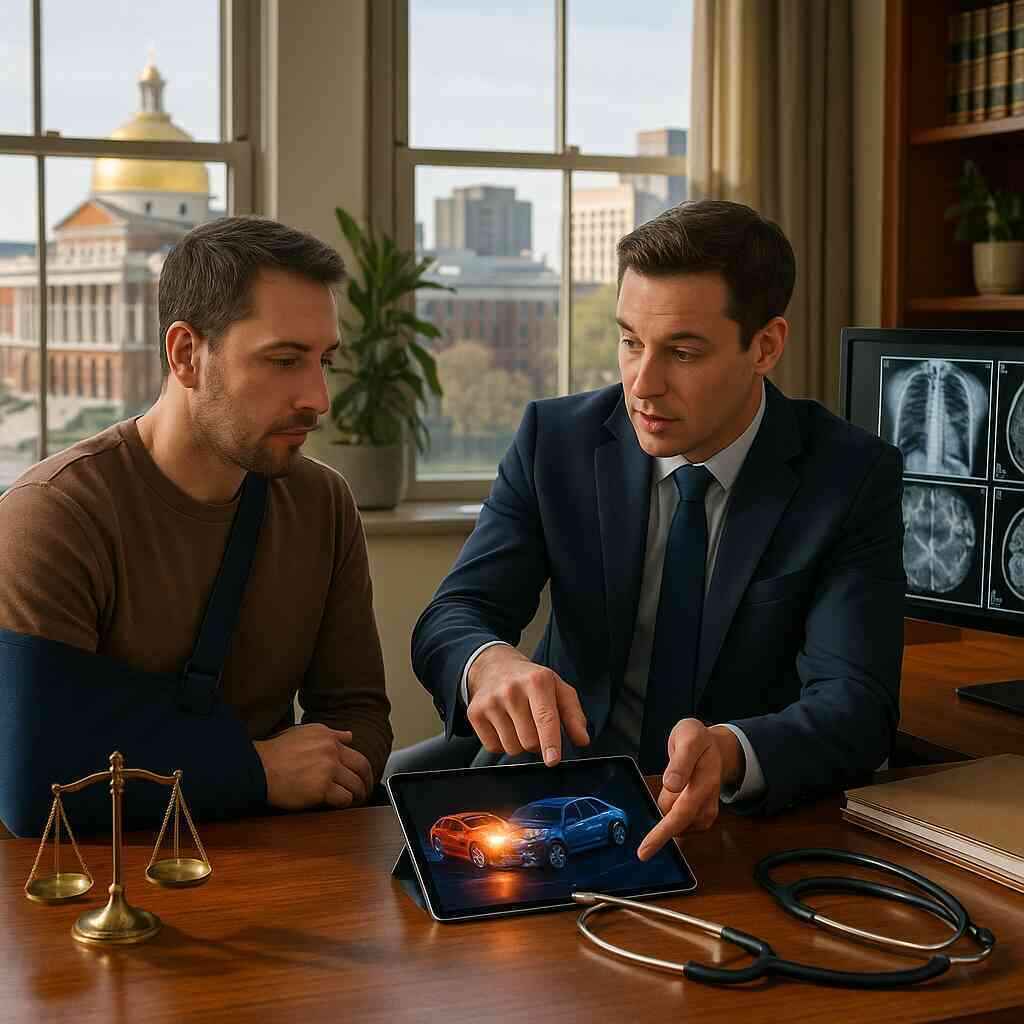 Choosing a Massachusetts Personal Injury Attorney with the Skills that Matter
Quick reference matrix of the five must-have competencies
Selecting legal representation should never feel like guesswork. A seasoned Massachusetts personal injury lawyer must display five core competencies, each reinforcing the others. First comes an advanced negotiation strategy in car accident claims, which turns raw evidence into powerful settlement leverage. Second is deep knowledge of the MA comparative negligence statute, allowing counsel to protect compensation even when liability is split. Third, mastery of courtroom evidence presentation ensures juries see a clear, persuasive story rather than scattered facts.
Fourth, strategic jury selection techniques help seat impartial citizens who can fairly value pain and suffering. Fifth, medical expert deposition experience links complex diagnoses to everyday realities, preventing insurers from downplaying injuries. When these skills work together, the injured party gains both procedural strength and emotional support. Any attorney missing even one pillar leaves money on the table and risks on the client’s shoulders.
How Personal Injury Law Locator connects you with attorneys who excel
Finding counsel who checks every box becomes effortless through the Personal Injury Law Locator’s nationwide database. The platform analyzes your accident details, then highlights attorneys with documented wins in negotiations, trials, and medical collaborations. Instead of scrolling endless advertisements, you review verified performance metrics and communication styles suited to your personality.
The service’s regional depth also helps if your collision involves multiple jurisdictions. Suppose a negligent driver resides out of state; the portal can instantly display Maine accident claim attorney options who coordinate seamlessly with Massachusetts co-counsel. This integrated network keeps momentum high and prevents procedural missteps that insurers exploit.
Next steps for safeguarding your cause of action today
Momentum favors the prepared, so act before evidence fades or statutes run. Begin by gathering police reports, medical bills, and any photos capturing vehicle damage or visible injuries. Then, consult Personal Injury Law Locator to secure a free, no-obligation case evaluation that aligns you with targeted expertise.
If you anticipate cross-border litigation or simply want comparative pricing, explore nearby resources like the Vermont plaintiff lawyer listings for perspective. Once you select counsel, follow medical instructions diligently and document every symptom change. Your attorney will weave those records into an irrefutable narrative. With proactive partnership, you transform a confusing crisis into a structured legal strategy aimed at full, fair compensation.
Frequently Asked Questions
Question: In your blog post What Are the Top 5 Personal Injury Lawyers’ Skills in Massachusetts? you highlight traits like advanced negotiation strategy and courtroom evidence presentation. How does Personal Injury Law Locator verify that the attorneys it lists genuinely demonstrate these abilities?
Answer: Personal Injury Law Locator maintains a nationwide database but applies a Massachusetts-specific vetting checklist before showcasing any personal injury lawyer near you. We review recent verdicts, high-stakes settlement tactics, trial transcripts, and peer references to confirm mastery of courtroom evidence presentation, deep knowledge of the MA comparative negligence statute, and aggressive insurer negotiation leverage. We also evaluate client testimonials for proof of responsive client communication and ethical contingency fee structuring. Attorneys who cannot supply documentation-such as persuasive demand letter drafting samples or medical expert deposition experience-are not approved for our platform. This rigorous process means you browse only lawyers who already embody the top five Massachusetts personal injury litigation skills detailed in the article.
Question: What advanced negotiation strategy in car accident claims can a Massachusetts attorney from your network use to outmaneuver an insurance company’s bad-faith tactics?
Answer: Lawyers listed on Personal Injury Law Locator begin with thorough accident scene reconstruction insight, often partnering with biomechanical experts within 24 hours of the crash. They build proactive case valuation accuracy by projecting future medical bills, lost wages, and pain and suffering before the insurer can anchor a low offer. Using technology-driven case organization, they create demand letters that cite comparable jury verdicts and highlight potential punitive exposure, then schedule early mediation to leverage the carrier’s cost-of-defense calculus. Because these attorneys have community reputations for integrity and relentless trial preparation discipline, adjusters recognize real courtroom risk and elevate reserves quickly, resulting in larger settlements for the injured party.
Question: How fast can Personal Injury Law Locator match an injured person with a Massachusetts personal injury lawyer who understands both catastrophic injury case management and the state’s comparative negligence framework?
Answer: Our platform can generate tailored matches in seconds. After you enter basic accident details-such as type of injury, accident date, and county-we cross-reference attorneys who demonstrate meticulous statute of limitations tracking, sophisticated lien resolution tactics, and deep command of Massachusetts comparative negligence rules. Because we monitor real-time legal trend updates, you receive options that are already adapting to the latest precedents. Most users schedule a free consultation within the same day, gaining immediate protection against insurance company pressure while securing counsel capable of coordinating complex medical treatment and negotiating multimillion-dollar catastrophic injury settlements.
Question: Does Personal Injury Law Locator screen for multilingual client advocacy skill and responsive client communication, and why is that crucial to a successful personal injury claim?
Answer: Absolutely. Massachusetts is linguistically diverse, so we flag firms that provide bilingual paralegals, certified interpreters, and translated client portals. This ensures every injured person fully understands medical treatment plans, deposition schedules, and contingency fee agreements, which reduces missed appointments-something insurers might cite to devalue a personal injury claim. Responsive client communication also lowers stress, allowing clients to focus on physical recovery while their legal team manages paperwork, insurance claims, and court deadlines. By prioritizing firms with these capabilities, Personal Injury Law Locator maximizes both client satisfaction and case value.